PBX phone system: Unlocking 2025's Power
PBX phone system: Unlocking 2025’s Power
Why Your Business Needs a PBX Phone System
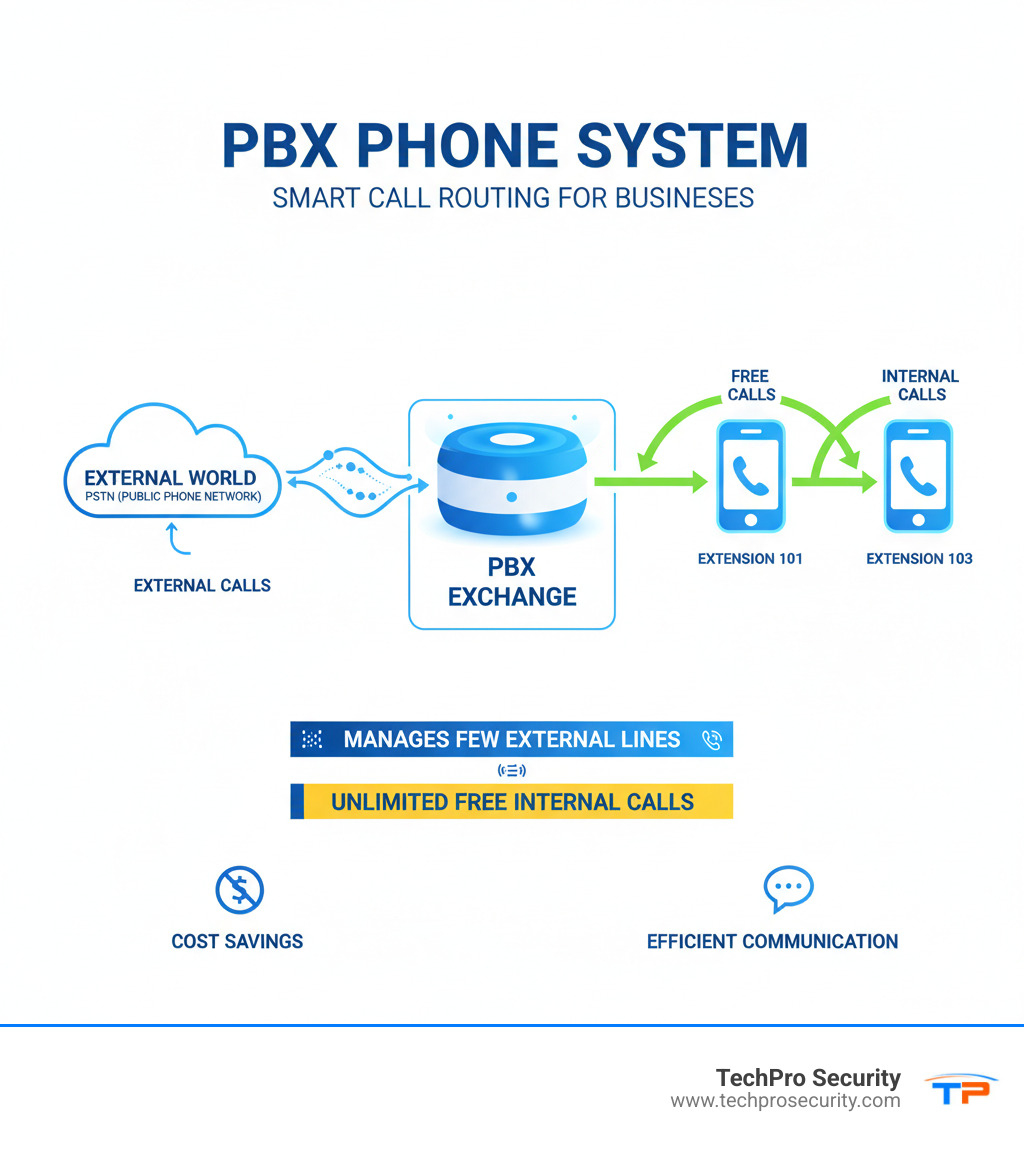
A PBX phone system (Private Branch Exchange) is a private telephone network that lets a business manage multiple phone lines, route calls efficiently, and use professional features like extension dialing and automated attendants. The core purpose is to connect many internal phones to a smaller number of external lines, enabling free internal calls and reducing costs compared to traditional services. Modern systems can be traditional (analog), on-premise IP PBX, or cloud-based.
For most businesses, a single phone line isn’t enough to handle customer inquiries and internal needs. A PBX solves this by creating a private network that shares external lines among many users, all while providing professional call management.
With 88% of customers using phone calls to engage with companies, according to Salesforce research, a robust phone system is a business necessity. Thankfully, modern PBX systems have evolved from bulky hardware into flexible, cloud-based solutions for businesses of all sizes.
I’m Brad Besner, founder of TechPro Security Products. Since 2007, my team has specialized in security integration, and we’ve implemented numerous PBX phone systems as part of comprehensive communication solutions for our clients. We understand how to integrate these systems seamlessly with your security infrastructure for maximum reliability.
The Evolution and Mechanics of Business Telephony
The concept of a PBX phone system (Private Branch Exchange) emerged to solve a major business problem: the high cost and inefficiency of early telephone networks. Originally, every call required a human operator to manually connect lines. The PBX automated this process within a business, creating a private, internal phone network.
The economic benefit was immediate. A PBX handles calls between employees locally, so they never touch the public network and are completely free. For external calls, a PBX allows a company with 50 employees to share just 10 or 15 external lines, drastically reducing monthly phone bills. It acts as a traffic controller, routing internal calls directly and managing the pool of shared external lines for incoming and outgoing calls.
The biggest evolution has been the shift from traditional circuit-switched networks to packet-switched networks powered by Voice over Internet Protocol (VoIP). Instead of a dedicated copper wire, VoIP converts your voice into digital data packets and sends them over the internet. This change has enabled features and cost savings the old telephone companies never imagined. Many businesses now use SIP Trunking to connect their PBX to the internet instead of using physical phone lines, offering greater flexibility and lower costs.
From Analog to Digital: A Brief History
Business phone systems evolved from Key Telephone Systems (KTS)—those old phones with rows of light-up buttons for each line—to more advanced analog PBX systems. The real game-changer, however, was the rise of IP PBX, which transmits voice calls over the same data network used for email and web browsing.
This shift is now a necessity. The older ISDN (Integrated Services Digital Network) technology is being phased out, with major carriers planning a complete migration to all-IP networks by 2025. For businesses still using legacy analog or ISDN systems, upgrading isn’t just a good idea—it’s essential for maintaining communications.
How VoIP Powers Modern PBX Systems
Voice over Internet Protocol (VoIP) is the engine of modern PBX phone systems. When you speak into an IP phone or a softphone (software on your computer), your voice is digitized, broken into data packets, and sent over your LAN infrastructure and the internet. This process is nearly instantaneous, providing clear, immediate conversations.
The benefits are significant:
- Reduced call costs: Internet-based calls eliminate most long-distance and international charges.
- HD voice quality: Modern VoIP often delivers clearer audio than traditional landlines.
- Simplified infrastructure: Voice and data run on a single network, reducing cabling and maintenance complexity.
- Flexibility and mobility: Employees can use their business extension from anywhere with an internet connection, using a desk phone, laptop, or smartphone app. This is a massive advantage for businesses with remote workers or multiple locations.
For more details on how we help businesses implement these advanced communication systems, check out our VoIP and PBX Management services.
Comparing the Types of PBX Systems
Choosing a PBX phone system means deciding on the technology that will power your business communications. There are three main types, each with distinct trade-offs in cost, control, and maintenance.
Think of it this way: a traditional PBX is like an old, reliable truck that’s expensive to maintain. An on-premise IP PBX is a modern vehicle you own and manage yourself. A hosted PBX is like a ride-share service—you get all the benefits of transportation without owning the car.
Let’s break them down. Here’s a quick comparison:
Feature Traditional PBX On-Premise IP PBX Hosted/Cloud PBX
Hardware Significant on-site physical hardware On-site server/appliance, IP phones Minimal on-site hardware (IP phones, routers)
Cost Model High upfront capital expenditure (CapEx) Moderate to high upfront CapEx Subscription-based operational expenditure (OpEx)
Maintenance High, requires specialized technicians Moderate, requires IT staff/professional Low, managed by provider
Scalability Limited, costly upgrades Moderate, dependent on hardware capacity High, easily scaled up or down
Connectivity POTS, ISDN lines LAN, Internet (SIP Trunking, PRI) Internet (VoIP)
Key Features Basic call routing, voicemail, extensions Advanced features, UC, CRM integration Comprehensive UC features, mobile apps, always updated
Network Separate voice and data networks Unified voice and data network Unified voice and data network (external)
What is a Traditional PBX Phone System?
A traditional analog PBX phone system is the legacy option. It consists of a large hardware box in a telecom closet, connected to the outside world via Plain Old Telephone Service (POTS) or ISDN lines. While reliable, these systems involve high upfront costs, expensive maintenance from specialized technicians, and very limited features. With carriers phasing out ISDN by 2025, these systems are quickly becoming obsolete.
What is an On-Premise IP PBX?
An on-premise IP PBX phone system is a modern alternative that you own and manage on-site. It uses a server or appliance to run calls over your existing data network using VoIP. This provides access to advanced features like call recording, CRM integration, and the use of softphones. However, it still requires a capital investment in hardware and needs in-house IT expertise (or a trusted partner) for management, security, and updates. It’s a good choice for businesses that want full control and have the resources to manage it.
What is a Hosted/Cloud PBX Phone System?
A hosted PBX phone system (or cloud PBX) is the direction the industry is heading. Instead of owning hardware, you subscribe to a service from a provider who manages everything in their data centers. This model eliminates large upfront costs in favor of a predictable monthly fee (OpEx).
Scalability is a major advantage; you can add or remove users in minutes. The provider handles all maintenance and updates, so you always have the latest features. Most importantly, it offers unparalleled mobility and remote work support, allowing employees to use their business line from anywhere. For most businesses, especially those without a dedicated IT team, a hosted solution offers the best combination of features, flexibility, and cost-effectiveness. Learn how we can help integrate a modern phone system into your business with our VoIP and PBX Management services.
Core Benefits and Features of a Modern PBX Phone System
A modern PBX phone system does more than just connect calls; it actively supports your business goals. With 88% of customers using phone calls to engage with companies, according to Salesforce, your phone system is a critical customer touchpoint. The right system delivers tangible benefits across your organization.
Key benefits include an improved customer experience through intelligent call routing, improved productivity with features like extension dialing and voicemail-to-email, and seamless scalability that allows your phone system to grow with your business. For companies embracing remote work, a modern PBX is essential, keeping your team connected from anywhere. It also projects a professional business image, even for small operations, and delivers significant cost savings by leveraging VoIP technology. For small businesses, these systems level the playing field, making enterprise-grade features affordable.
Essential Business-Grade Features
Modern PBX phone systems are packed with features that streamline communication:
- Auto-attendants (IVR): Greet callers professionally and route them to the right department (“Press 1 for Sales…”).
- Call Routing & Forwarding: Direct calls based on time of day, caller ID, or team member availability, ensuring no important call is missed.
- Voicemail-to-Email: Delivers voicemail messages as audio files directly to your email inbox for easy access and management.
- Call Queues & Ring Groups: Manage high call volumes by placing callers in a queue or ringing multiple phones at once to ensure someone answers.
- Conference Calling: Easily bring multiple people into a single call for team or client meetings.
- Music on Hold: Keeps callers engaged and informed while they wait, preventing hang-ups.
- Call Recording & Reporting: Provides data for training, quality assurance, and operational insights like call volume and wait times.
- Extension Dialing, Mobile Apps & Softphones: Enable free internal calls and turn smartphones and computers into full-featured business extensions.
The Move Towards Unified Communications (UC)
The evolution of the PBX phone system is leading to Unified Communications (UC), which integrates voice, video, and messaging into a single platform.
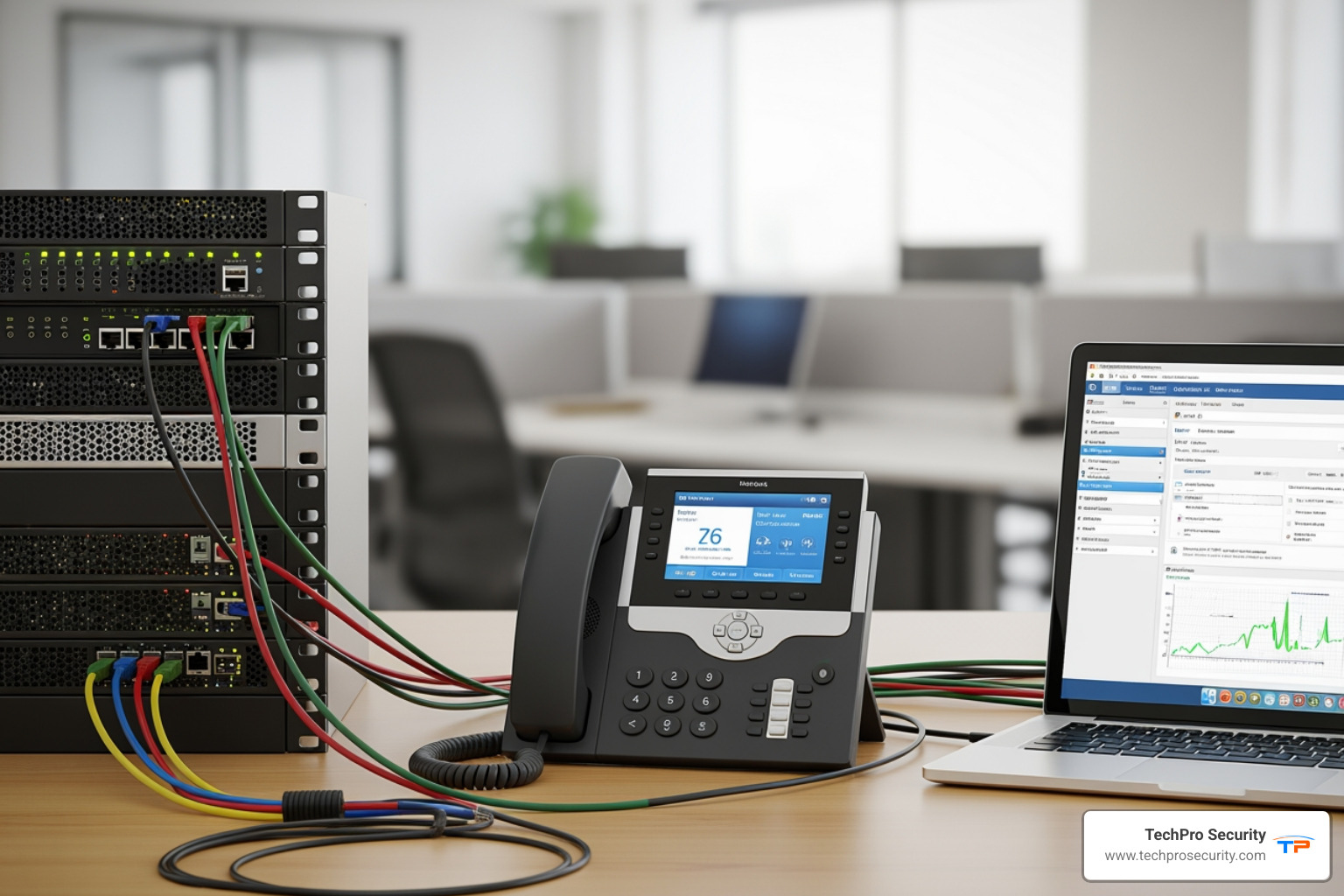
UC platforms combine all communication tools—voice, video conferencing, and instant messaging—into one application. Key features include:
- Presence Information: See the real-time availability of your colleagues (e.g., available, on a call, in a meeting).
- CRM Integration: Connect your phone system to your customer database. When a customer calls, their information automatically appears on your screen, enabling personalized service.
- Improved Collaboration: Seamlessly escalate a chat to a voice or video call, share screens, and collaborate effectively, regardless of location.
A modern IP or cloud PBX serves as the foundation for a UC environment, changing how your organization communicates and preparing it for the future of work.
Choosing and Implementing Your PBX Solution
Picking the right PBX phone system is a strategic decision that will shape your business communications for years. The process starts with assessing your current and future needs. Are you planning to hire more staff, open new locations, or support remote work? Your answers will guide your choice.
Budget is another key factor. Modern cloud-based systems shift the cost from a large upfront capital expenditure (CapEx) to a predictable monthly operational expenditure (OpEx), a model that benefits many businesses.
Finally, consider the future. The industry is moving toward UCaaS (Unified Communications as a Service), a cloud model that bundles telephony, video, and messaging into one constantly evolving platform. Choosing a forward-thinking solution prevents your system from becoming obsolete.
Key Factors to Consider When Choosing a System
When we consult with clients, we focus on these fundamental factors to ensure the phone system is an asset, not a headache.
- Scalability: Can the system easily grow with your business? Cloud systems excel here, allowing you to add users with a few clicks.
- Cost Structure: Do you prefer a large upfront investment (CapEx) or a predictable monthly subscription (OpEx)?
- Ease of Management: Do you have an IT team to manage an on-premise system, or would you prefer a provider-managed cloud solution?
- Hardware Compatibility: Does the system require proprietary phones, or can you use standard SIP phones, softphones, and mobile apps?
- Required Features: List your must-have features, such as CRM integration, call recording, or video conferencing, before you start shopping.
- Provider Reliability: For hosted solutions, look for providers with strong uptime guarantees (SLAs) and responsive, US-based support.
Security Considerations for Your PBX
Here’s something that keeps me up at night: businesses invest in sophisticated PBX phone systems but forget that these systems are essentially computers connected to the internet. And anything connected to the internet can be attacked.
Key threats include:
- Toll Fraud: Hackers gain access and rack up thousands of dollars in unauthorized international calls. The FCC has issued warnings about phone scams targeting PBX systems due to this widespread problem.
- Eavesdropping: Unencrypted VoIP calls can be intercepted, exposing confidential client or financial discussions.
- Denial-of-Service (DoS) Attacks: Malicious traffic can flood your system, blocking all legitimate calls from getting through.
For on-premise systems, physical security is also critical. Your server room must be locked and protected.
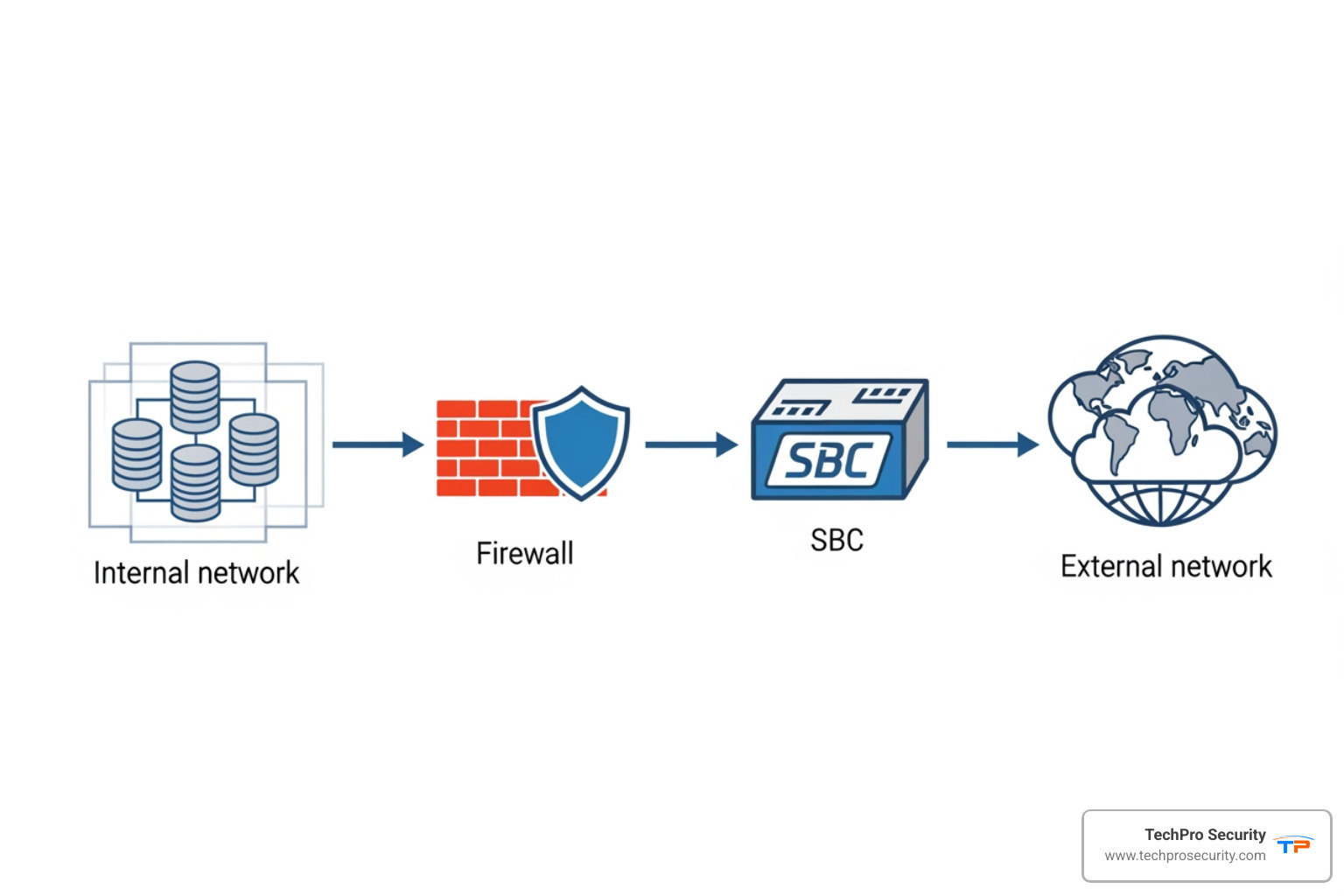
To combat these threats, Session Border Controllers (SBCs) are vital. An SBC acts as a specialized firewall for your voice traffic, blocking attacks, preventing toll fraud, and encrypting communications. For businesses serious about VoIP security, upgrading security with SBCs isn’t optional—it’s essential protection.
A layered defense, including strong encryption and robust firewalls, is the best approach. At TechPro Security, we emphasize securing the entire network, as your PBX is only as secure as the network it runs on. Learn more about our approach in our VoIP and PBX Management services.
Conclusion: Future-Proofing Your Business Communications
We’ve traced the PBX phone system from manual switchboards to today’s powerful cloud platforms that integrate voice, video, and messaging. While the technology has changed dramatically, the fundamental need for reliable business communication remains.
The trend is clear: businesses are moving to cloud and VoIP solutions for their lower costs, greater flexibility, and enterprise-grade features. Your communication system is a strategic asset that impacts customer satisfaction, employee productivity, and your ability to grow.
At TechPro Security, we’ve built our reputation on providing reliable, custom security solutions. We recognize that your communication infrastructure must be just as secure and dependable as your surveillance cameras or access control. That’s why we offer VoIP and PBX Management services as part of our commitment to supporting your entire business infrastructure.
Our approach is simple: we understand your needs, recommend proven technology, and back it with our extensive warranties and free US-based support. We want to empower your business with technology that works for you.
The future of business communication is here. By choosing the right PBX phone system, you’re not just solving today’s challenges—you’re setting your business up for future success. Ready to learn more? Explore our VoIP and PBX Management services and let’s discuss a solution for your unique needs.