Best Retail Store Security Systems in South Florida 2026
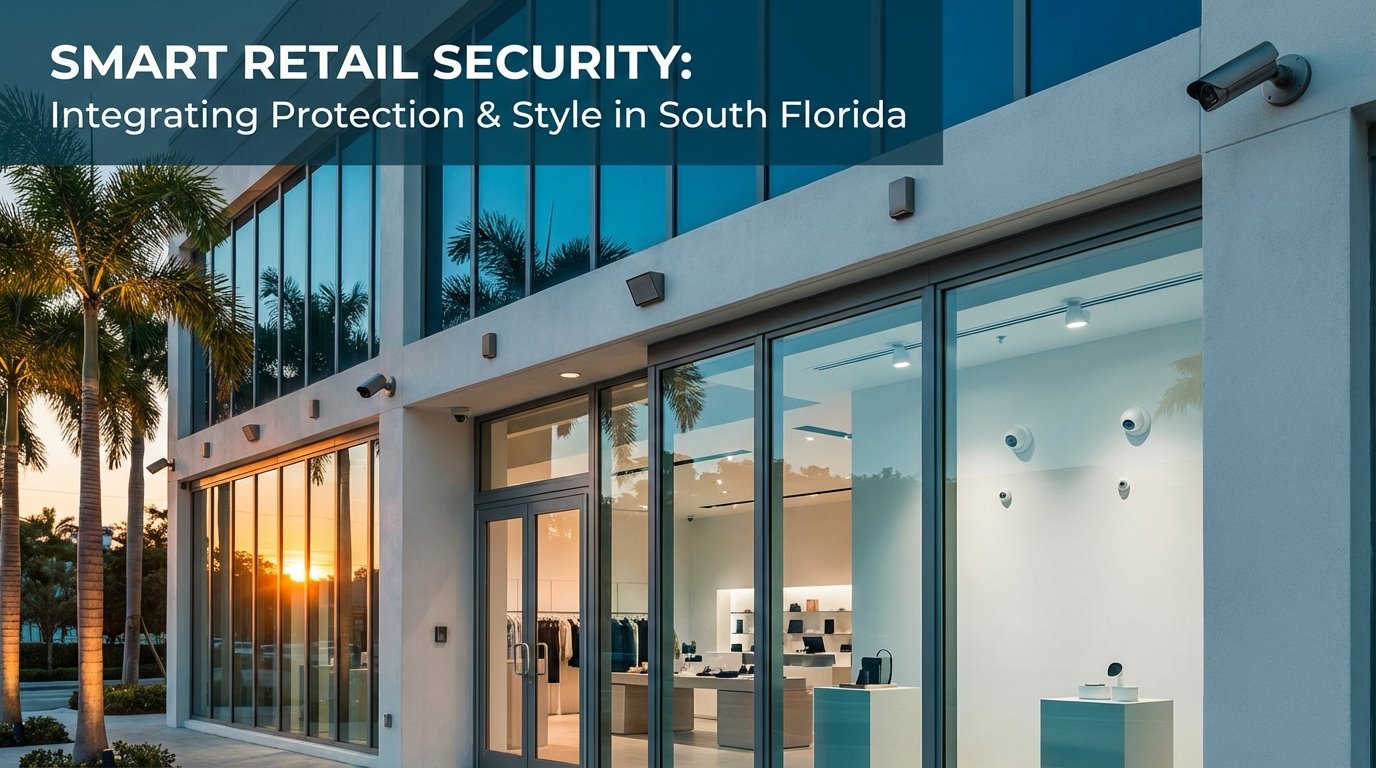
Retail theft and shrinkage cost American businesses over $112 billion annually, with organized retail crime surging 26% in 2024 alone. For South Florida store owners, these statistics represent more than numbers—they reflect real threats to profitability, employee safety, and business sustainability. The right retail security systems transform your store from a vulnerable target into a protected business environment where legitimate customers feel safe and potential thieves look elsewhere.
Modern retail security systems have evolved far beyond simple security cameras mounted in corners. Today’s integrated solutions combine intelligent video analytics, access control, real-time monitoring, and advanced loss prevention technologies that work seamlessly together. Whether you operate a boutique in Coral Gables, a convenience store in Fort Lauderdale, or a multi-location retail chain across Miami-Dade County, understanding which security components protect your specific business model determines your success in preventing loss.
Understanding Modern Retail Security Threats in 2026
Before selecting security systems, South Florida retailers must understand the evolving threat landscape. Traditional shoplifting remains problematic, but organized retail crime has become increasingly sophisticated. Criminal groups now use technology to identify vulnerabilities, coordinate multi-person thefts, and quickly resell stolen merchandise through online marketplaces.
Internal theft continues accounting for approximately 30% of retail shrinkage. Employees familiar with your security blind spots, camera locations, and operational procedures can systematically steal inventory or manipulate transactions. Meanwhile, administrative errors, supplier fraud, and return fraud compound these challenges.
South Florida’s unique environment creates additional considerations. High foot traffic from tourism increases both legitimate customers and theft opportunities. The region’s climate demands outdoor-rated equipment for parking lot surveillance. Multiple languages spoken throughout diverse communities require security signage and system interfaces supporting Spanish, Creole, and Portuguese.
Essential Components of Comprehensive Retail Security Systems
High-Definition Video Surveillance
Video surveillance forms the foundation of effective retail security systems. Modern IP cameras deliver 4K resolution that captures facial details, license plates, and product-level clarity essential for identifying suspects and prosecuting theft cases. Unlike legacy analog systems, today’s cameras provide usable evidence that law enforcement can actually work with.
Strategic camera placement maximizes coverage while minimizing blind spots. Critical locations include points of sale where transaction fraud occurs, entrances and exits to monitor everyone entering your store, high-value merchandise displays, stockrooms and receiving areas, parking lots for vehicle-related crimes, and cash handling areas. Wide-angle cameras reduce the total camera count needed while maintaining comprehensive coverage.
Advanced camera features specifically benefit retail environments. License plate recognition cameras in parking areas identify vehicles associated with known shoplifters or organized retail crime. People counting analytics track customer traffic patterns and conversion rates. Heat mapping reveals which store areas attract attention and which remain ignored, informing merchandise placement decisions.
Intelligent Video Analytics
Artificial intelligence transforms video surveillance from passive recording to active threat detection. Video analytics monitor camera feeds continuously, alerting staff to suspicious behaviors without requiring constant human observation. These systems recognize loitering in restricted areas, detect people moving against customer flow patterns, identify removed merchandise without corresponding point-of-sale transactions, track individuals across multiple camera views, and flag unusual after-hours activity.
Object detection algorithms specifically designed for retail environments identify when merchandise leaves shelves without purchases. Facial recognition technology, when legally implemented with proper signage, can alert staff when known shoplifters enter your store. Integration with POS systems correlates transactions with video footage, immediately flagging suspicious refunds or voids.
Access Control Systems
Controlling who enters restricted areas prevents both internal theft and unauthorized access. Modern access control systems use keycards, fobs, biometric scanners, or mobile credentials instead of traditional keys that can be copied or lost. Each access attempt creates an audit trail showing exactly who entered which areas and when.
For retail environments, access control typically secures stockrooms containing unprocessed inventory, cash offices and safes, manager offices with sensitive documents, server rooms housing security and POS systems, and receiving docks during off-hours. Time-based access permissions ensure employees only access these areas during their scheduled shifts.
Integration between access control and video surveillance automatically triggers recording when doors open, capturing everyone entering and exiting secured spaces. This integration proves invaluable when investigating internal theft or inventory discrepancies.
Point-of-Sale Integration
POS integration represents one of retail security’s most powerful capabilities. By connecting your security cameras to your point-of-sale system, every transaction triggers synchronized video recording. This integration enables retailers to review corresponding video footage for any suspicious transaction instantly.
POS integration detects transaction anomalies including excessive voids or refunds, manual price overrides, no-sale drawer opens, deleted items, and employee discounts on high-value merchandise. When unusual patterns emerge, security footage provides visual evidence showing exactly what occurred during these transactions.
This capability particularly addresses “sweethearting,” where cashiers intentionally undercharge friends or family members. By reviewing video footage of flagged transactions, managers identify cashiers failing to scan items or applying unauthorized discounts.
Advanced Loss Prevention Technologies for South Florida Retailers
Electronic Article Surveillance (EAS)
Electronic article surveillance systems use tags attached to merchandise that trigger alarms when someone attempts leaving without proper deactivation at checkout. Modern EAS technology has become significantly more reliable, reducing false alarms while maintaining high detection rates.
Radio frequency (RF) systems work well for most retail applications and support disposable tags affordable for lower-priced merchandise. Acousto-magnetic (AM) systems provide superior detection in stores with wide exits or metal fixtures that interfere with RF systems. Both technologies integrate with video surveillance to automatically capture footage when alarms trigger.
EAS effectiveness depends on proper implementation. Tags must be positioned where they’re difficult to remove without tools, staff must consistently deactivate tags during legitimate purchases, and alarm response protocols must be enforced so potential thieves know alarms generate immediate staff response.
Smart Safe Technology
Smart safes reduce cash handling risks by automating deposits and maintaining detailed transaction records. When cashiers deposit bills into smart safes, internal scanners validate and record each denomination, creating accountability throughout cash handling processes.
These systems reduce internal theft opportunities by limiting cash register float amounts and eliminating manual cash counting discrepancies. Real-time reporting alerts managers to unusual deposit patterns. Integration with surveillance systems captures video of every deposit, deterring employee theft while protecting honest employees from false accusations.
For South Florida retailers, smart safes also reduce robbery targets by minimizing accessible cash on premises. Visible smart safe usage signals to potential criminals that cashiers cannot open main cash storage.
Mobile Monitoring and Remote Management
Modern retail security systems provide mobile access allowing owners and managers to monitor multiple locations from smartphones or tablets. Live camera viewing lets you check in on your stores anytime from anywhere. Real-time alerts notify you immediately about alarms, unusual activity, or system issues. Remote access control lets you lock/unlock doors or grant temporary access without being on-site.
This capability proves especially valuable for multi-location retailers. Instead of driving between stores to verify closing procedures or investigate reported incidents, managers review camera footage remotely. When alarm companies call about triggered sensors, you can verify legitimate activity versus actual break-ins before dispatching authorities.
Selecting Security Systems for Different Retail Formats
Small Boutiques and Specialty Stores
Smaller retail spaces require complete coverage with fewer cameras. Focus on high-definition cameras at registers capturing transaction details and faces, entrance cameras recording everyone entering, and overview cameras providing general floor coverage. Conspicuous camera placement often provides sufficient deterrence in boutique environments.
Budget-conscious boutique owners should prioritize POS integration and quality entrance cameras over extensive camera counts. Consider starting with core coverage and expanding as your business grows. Professional installation ensures even basic systems provide reliable protection and admissible evidence.
Convenience Stores and Quick-Service Retail
High-traffic convenience stores face unique challenges including frequent robberies, quick grab-and-run thefts, and pay-at-pump fuel theft. These environments require high-frame-rate cameras capturing fast movement, vandal-resistant housings protecting against intentional damage, license plate recognition for fuel theft prevention, and wide dynamic range cameras handling harsh lighting conditions.
Prioritize camera placement covering registers from multiple angles, exterior pumps and parking areas, ATM machines, and entrances showing arriving vehicles. Consider integrating panic buttons at registers providing silent alarm capabilities during robberies.
Multi-Location Retail Chains
Retail chains benefit from centralized monitoring viewing all locations through unified platforms. Standardized equipment across locations simplifies management and reduces training complexity. Cloud-based systems eliminate on-site server maintenance while providing corporate security teams real-time access to all stores.
Enterprise-level retail security systems should include centralized reporting comparing shrinkage and incidents across locations, automated compliance monitoring ensuring all cameras function properly, remote configuration simplifying system updates across all stores, and integrated analytics identifying performance patterns across your retail network. For more information on commercial security approaches suitable for multi-location businesses, review our guide on best security systems for South Florida commercial properties in 2026.
Implementation Best Practices for Maximum Security Effectiveness
Professional Security Assessment
Effective security implementation begins with professional assessment identifying your specific vulnerabilities. Experienced security integrators conduct site surveys evaluating current security gaps, high-risk areas requiring priority protection, lighting conditions affecting camera performance, network infrastructure supporting IP cameras, and employee workflow patterns affecting system design.
This assessment prevents costly mistakes like inadequate camera coverage, improperly positioned cameras creating blind spots, insufficient network bandwidth causing video lag, and incompatible components failing to integrate properly. Professional assessment ensures your investment delivers actual protection rather than false security.
Strategic Camera Positioning
Camera placement significantly impacts system effectiveness. Position cameras to capture faces at entrance heights as people enter, not overhead angles showing only the tops of heads. Place cameras behind registers facing customers to record transaction interactions and faces. Use overlapping coverage in high-value areas so if one camera is obscured or disabled, another maintains coverage.
Avoid positioning cameras directly facing windows or glass doors where backlighting obscures details. Use wide dynamic range cameras in these locations or adjust positioning to minimize glare. In parking areas, ensure adequate lighting supplements cameras—even advanced low-light cameras require some illumination for color footage.
Network Infrastructure and Bandwidth Planning
IP-based retail security systems require robust network infrastructure. Each high-definition camera consumes significant bandwidth, particularly when recording continuously. Inadequate networks cause video lag, dropped frames, or system instability undermining security effectiveness.
Professional installation includes network assessment ensuring sufficient bandwidth for all cameras, PoE (Power over Ethernet) switches providing power to cameras through network cables, network switches with appropriate throughput supporting your camera count, and proper cable installation meeting data transmission standards.
Managed network switches with quality of service (QoS) settings prioritize security camera traffic over less critical data, ensuring surveillance maintains performance even during high network usage.
Comprehensive Staff Training
Even sophisticated security systems fail without proper staff training. Employees must understand how to respond to EAS alarms professionally without creating uncomfortable confrontations, review relevant camera footage when investigating incidents, use access control systems properly, follow cash handling procedures with smart safes, and recognize suspicious behaviors warranting attention.
Training should emphasize that security systems support staff safety as much as loss prevention. Cameras document incidents protecting employees from false accusations and providing evidence if customers claim injury or dispute transactions.
Compliance Considerations for South Florida Retail Security
Florida law permits video surveillance in public areas of retail stores without customer consent. However, audio recording requires two-party consent in Florida, making audio recording of customer conversations legally problematic. Most retail installations focus solely on video surveillance.
Visible signage informing customers about surveillance satisfies transparency expectations and enhances deterrence. Signs reading “24-Hour Video Surveillance” or “Premises Under Constant Video Monitoring” remind potential shoplifters that their actions are recorded.
Retailers using facial recognition technology should implement clear policies about data retention, usage limitations, and privacy protections. While facial recognition isn’t prohibited in Florida retail environments, transparency about its use maintains customer trust.
Employee monitoring requires notification that workplace surveillance occurs. During hiring, employees should acknowledge they understand video surveillance operates in work areas. However, cameras should never be positioned in areas where employees have privacy expectations like restrooms or changing areas.
Integration with Broader Security Strategies
Retail security systems work most effectively as part of comprehensive security strategies combining technology, procedures, and staff awareness. Physical security measures including adequate lighting, reinforced doors and windows, and bollards protecting storefronts complement electronic systems.
Cash management procedures limiting accessible cash reduce robbery incentives. Regular inventory audits identify shrinkage patterns helping focus security resources. Background checks during hiring reduce internal theft risks. Customer service excellence means staff engaging with customers deters opportunistic theft.
For retailers with sensitive perimeter areas like storage yards or delivery zones, specialized technologies provide enhanced protection. Learn more about advanced options in our article on thermal camera systems for perimeter security.
Working with Professional Security Integrators
Professional security integration delivers significantly superior results compared to DIY or big-box consumer systems. Licensed integrators understand Florida building codes, properly design systems for your specific retail environment, provide warranties and ongoing support, integrate multiple security components seamlessly, and ensure legal compliance.
When selecting a security partner, prioritize companies with retail-specific experience, references from similar businesses, manufacturer certifications for equipment they install, and local presence providing responsive service. Question potential integrators about their experience with POS integration, retail analytics, and loss prevention strategies specific to your retail format.
Professional installation includes proper equipment mounting preventing tampering, weather-resistant installation for outdoor cameras, secure network configuration protecting against hacking, and comprehensive testing ensuring all components function correctly. Ongoing maintenance contracts keep systems operating reliably with firmware updates, equipment inspections, and priority service response.
Measuring Security System ROI
Retail security systems deliver measurable return on investment through reduced shrinkage, lower insurance premiums, decreased liability exposure, improved employee productivity, and enhanced customer confidence. Track shrinkage percentages before and after implementation to quantify loss reduction.
Many retailers experience 30-60% shrinkage reductions after implementing comprehensive security systems. For a store with $500,000 in annual inventory loss, even a 40% reduction saves $200,000 annually—easily justifying system investment within the first year.
Insurance carriers often provide premium discounts for businesses with certified security systems. Submit documentation of your professional installation to your insurance provider to request applicable discounts. Video evidence also accelerates legitimate liability claims while protecting you from fraudulent injury claims.
Future-Proofing Your Security Investment
Technology evolves rapidly, but properly designed retail security systems remain effective for many years. Prioritize scalable systems allowing component additions without full replacement. Select manufacturers with strong track records and ongoing product development. Choose IP-based systems rather than proprietary analog technology with limited upgrade paths.
Cloud-based video management systems receive automatic software updates incorporating new features and security patches without requiring on-site technician visits. This approach ensures your system remains current with evolving technology while minimizing ongoing maintenance costs.
Budget for gradual system expansion and updates. Plan to upgrade cameras in highest-priority areas first, then expand coverage progressively. This phased approach spreads costs while continuously improving security coverage.
Frequently Asked Questions
How many security cameras does a typical retail store need?
Camera requirements vary significantly based on store size, layout, and merchandise value. Small boutiques may need 4-6 cameras for complete coverage, while larger stores require 12-20+ cameras. Professional site assessment determines optimal camera count for your specific space. Prioritize quality coverage over maximum camera quantity—properly positioned high-definition cameras deliver better results than numerous low-quality cameras.
Can retail security systems really reduce shoplifting?
Yes, comprehensive retail security systems typically reduce shoplifting 40-60% when properly implemented. Visible cameras deter opportunistic theft, while video analytics and POS integration detect sophisticated theft methods. However, systems must be properly maintained, staff must be trained on response protocols, and technology should be combined with excellent customer service for maximum effectiveness.
What’s the difference between cloud-based and on-premise security systems?
Cloud-based systems store video footage on remote servers and provide access through internet connections without requiring on-site recording equipment. They offer easier remote access, automatic updates, and simplified multi-location management. On-premise systems store footage locally on network video recorders at your location, providing complete control over data but requiring more maintenance. Most modern retail installations benefit from hybrid approaches combining local storage for reliability with cloud backup for accessibility.
How long should retail security footage be retained?
Most retailers retain footage for 30-90 days, balancing storage costs against investigation needs. High-definition video requires substantial storage—a 16-camera system recording continuously may generate 10-20+ terabytes monthly. Incidents should be flagged and archived separately immediately upon discovery. Some jurisdictions mandate minimum retention periods for specific industries, so verify local requirements.
Are wireless security cameras suitable for retail environments?
While wireless cameras simplify installation in challenging locations, professional retail installations typically use wired IP cameras for superior reliability and performance. Wireless cameras depend on Wi-Fi connectivity that can be interrupted, require battery changes or charging, and may suffer interference in busy retail environments with numerous electronic devices. Wired cameras receive both power and data through single Ethernet cables, eliminating connectivity concerns.
What should I do if my security system catches someone shoplifting?
Contact law enforcement and provide them with relevant video footage. Do not physically confront suspected shoplifters—this creates liability risks and endangers staff. Train employees to provide excellent customer service that naturally deters theft, acknowledge suspicious individuals with friendly greetings, and immediately notify management when they observe theft. Save and archive footage related to all incidents, as prosecutors may request evidence weeks or months later.
Protect Your South Florida Retail Business
Selecting and implementing effective retail security systems represents one of the most important investments protecting your South Florida business. The right combination of high-definition surveillance, intelligent analytics, access control, and loss prevention technologies creates comprehensive protection reducing shrinkage, enhancing safety, and improving profitability.
TechPro Security Products specializes in designing and installing professional retail security systems throughout South Florida. Our licensed security integrators conduct thorough site assessments, recommend solutions tailored to your specific retail format, and provide expert installation with ongoing support. We understand the unique challenges facing South Florida retailers from high-traffic tourist areas to diverse multilingual communities.
Contact TechPro Security Products today for a free security consultation and discover how professional retail security systems protect your business, employees, and customers while delivering measurable return on investment. Our experienced team will assess your vulnerabilities, explain available technologies, and design a comprehensive security solution within your budget. Don’t wait until theft impacts your bottom line—protect your retail business with proven security systems that work.
{ “@context”: “https://schema.org”, “@type”: “FAQPage”, “mainEntity”: [ { “@type”: “Question”, “name”: “How many security cameras does a typical retail store need?”, “acceptedAnswer”: { “@type”: “Answer”, “text”: “Camera requirements vary significantly based on store size, layout, and merchandise value. Small boutiques may need 4-6 cameras for complete coverage, while larger stores require 12-20+ cameras. Professional site assessment determines optimal camera count for your specific space. Prioritize quality coverage over maximum camera quantity—properly positioned high-definition cameras deliver better results than numerous low-quality cameras.” } }, { “@type”: “Question”, “name”: “Can retail security systems really reduce shoplifting?”, “acceptedAnswer”: { “@type”: “Answer”, “text”: “Yes, comprehensive retail security systems typically reduce shoplifting 40-60% when properly implemented. Visible cameras deter opportunistic theft, while video analytics and POS integration detect sophisticated theft methods. However, systems must be properly maintained, staff must be trained on response protocols, and technology should be combined with excellent customer service for maximum effectiveness.” } }, { “@type”: “Question”, “name”: “What’s the difference between cloud-based and on-premise security systems?”, “acceptedAnswer”: { “@type”: “Answer”, “text”: “Cloud-based systems store video footage on remote servers and provide access through internet connections without requiring on-site recording equipment. They offer easier remote access, automatic updates, and simplified multi-location management. On-premise systems store footage locally on network video recorders at your location, providing complete control over data but requiring more maintenance. Most modern retail installations benefit from hybrid approaches combining local storage for reliability with cloud backup for accessibility.” } }, { “@type”: “Question”, “name”: “How long should retail security footage be retained?”, “acceptedAnswer”: { “@type”: “Answer”, “text”: “Most retailers retain footage for 30-90 days, balancing storage costs against investigation needs. High-definition video requires substantial storage—a 16-camera system recording continuously may generate 10-20+ terabytes monthly. Incidents should be flagged and archived separately immediately upon discovery. Some jurisdictions mandate minimum retention periods for specific industries, so verify local requirements.” } }, { “@type”: “Question”, “name”: “Are wireless security cameras suitable for retail environments?”, “acceptedAnswer”: { “@type”: “Answer”, “text”: “While wireless cameras simplify installation in challenging locations, professional retail installations typically use wired IP cameras for superior reliability and performance. Wireless cameras depend on Wi-Fi connectivity that can be interrupted, require battery changes or charging, and may suffer interference in busy retail environments with numerous electronic devices. Wired cameras receive both power and data through single Ethernet cables, eliminating connectivity concerns.” } }, { “@type”: “Question”, “name”: “What should I do if my security system catches someone shoplifting?”, “acceptedAnswer”: { “@type”: “Answer”, “text”: “Contact law enforcement and provide them with relevant video footage. Do not physically confront suspected shoplifters—this creates liability risks and endangers staff. Train employees to provide excellent customer service that naturally deters theft, acknowledge suspicious individuals with friendly greetings, and immediately notify management when they observe theft. Save and archive footage related to all incidents, as prosecutors may request evidence weeks or months later.” } } ] }