License Plate Recognition Cameras for Business Parking Lots
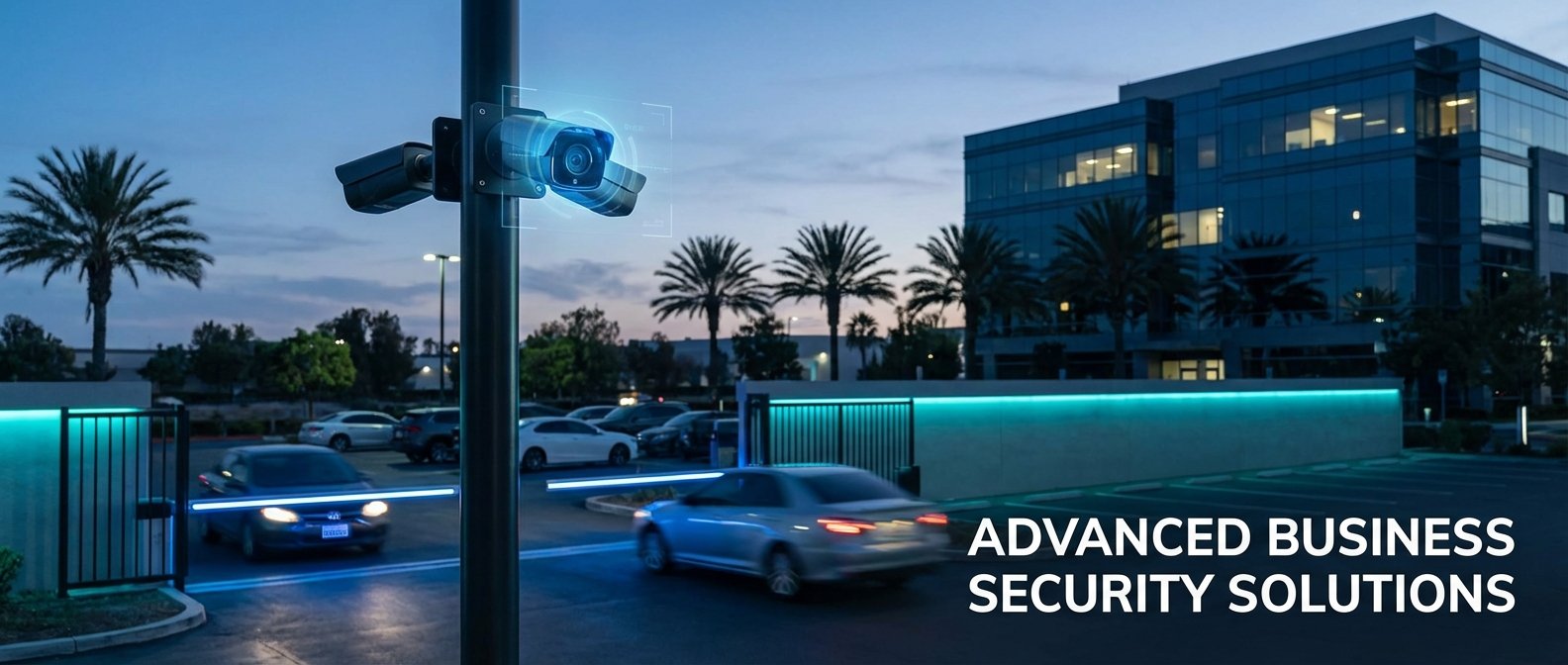
Managing parking lot security, access control, and traffic flow has become increasingly complex for businesses, especially those dealing with unauthorized parking, vehicle theft, or the need for detailed entry logs. License plate recognition cameras offer an automated solution that captures, reads, and stores vehicle data without requiring manual gate attendants or expensive staffing overhead.
These specialized surveillance systems combine high-resolution imaging with optical character recognition (OCR) software to automatically identify and record license plates of vehicles entering and exiting your property. For commercial facilities, HOAs, and government properties throughout South Florida, LPR technology has transformed parking management from a reactive security measure to a proactive access control and analytics tool.
What Are License Plate Recognition Cameras?
License plate recognition cameras (also called LPR, ALPR for Automated License Plate Recognition, or ANPR for Automatic Number Plate Recognition) are specialized security cameras designed specifically to capture clear images of vehicle license plates under various lighting and weather conditions. Unlike standard security cameras that provide general surveillance footage, LPR systems focus on extracting readable text data from license plates.
These systems use infrared illumination, precise focal lengths, and high-speed image processors to freeze motion blur and capture plates on vehicles traveling at typical parking lot speeds. The captured image is then processed through OCR algorithms that convert the plate characters into searchable digital text, which can trigger automated responses like gate openings, alerts, or database entries.
Modern LPR camera systems integrate with access control platforms, parking management software, and security databases to create comprehensive vehicle tracking solutions. For businesses, this means automatic verification of employee vehicles, visitor logging, and immediate alerts when unauthorized or flagged vehicles enter the property.
Key Components of LPR Camera Systems
A professional-grade license plate recognition system consists of several integrated components working together:
Specialized Camera Hardware
LPR cameras differ significantly from standard security cameras. They feature narrow fields of view optimized for license plate dimensions, typically capturing one or two traffic lanes. The sensors are designed for high shutter speeds (often 1/1000th of a second or faster) to eliminate motion blur from moving vehicles. Most systems include built-in infrared illuminators that reflect off license plates’ reflective surfaces without creating glare, ensuring clear captures day and night.
OCR Processing Software
The brain of the LPR system converts visual plate images into machine-readable text. Advanced algorithms account for various plate styles, fonts, and formats across different states. The software must handle challenging conditions like partial obstructions, dirt, fading, or non-standard plate configurations. Quality systems achieve read accuracy rates above 95% under optimal conditions.
Management Platform
The central software platform stores plate data, manages access lists, generates reports, and integrates with other security systems. Businesses can create whitelist databases of authorized vehicles, blacklist databases of banned vehicles, and visitor logs with time-stamped entries. The platform typically provides search functionality, real-time alerts, and analytics dashboards.
Integration Capabilities
Professional LPR systems connect with gate controllers, barriers, bollards, and access control systems to automate physical security responses. They can also integrate with property management software, parking payment systems, and enterprise security platforms for comprehensive facility management.
How License Plate Recognition Works in Parking Environments
Understanding the LPR process helps businesses optimize camera placement and system configuration for their specific parking layout.
When a vehicle approaches the camera’s detection zone, the system activates and begins capturing high-speed images. The camera takes multiple shots in rapid succession to ensure at least one clear capture regardless of vehicle speed or position. The built-in or external infrared illuminators activate automatically in low-light conditions, reflecting off the plate’s reflective coating.
The captured image is immediately processed by the OCR software, which locates the license plate within the frame, isolates the characters, and converts them to text. This process typically takes less than one second. The system then compares the extracted plate number against stored databases.
For authorized vehicles on the whitelist, the system can automatically trigger gate opening, send welcome notifications, or simply log the entry. For vehicles on a blacklist or not in the system, the platform can send real-time alerts to security personnel, deny access, or flag the entry for review. All plate reads are stored with timestamps, camera locations, and associated images for future reference and reporting.
Strategic Benefits for Business Parking Facilities
Implementing LPR cameras delivers operational advantages beyond basic surveillance:
Automated Access Control
Eliminate physical access cards, key fobs, or gate attendants. Vehicles become their own access credentials, reducing costs associated with managing physical tokens. Employees simply drive up, and the system grants or denies access automatically. This touchless approach also improves traffic flow during peak entry times, reducing gate queuing.
Enhanced Security and Enforcement
Instantly identify vehicles that shouldn’t be on your property. Create blacklists for terminated employees, previously problematic visitors, or vehicles associated with incidents. The system can alert security staff in real-time when flagged vehicles appear, enabling proactive response rather than reactive investigation. For properties experiencing unauthorized parking problems, LPR provides irrefutable documentation for enforcement actions.
Detailed Audit Trails
Every vehicle entry and exit creates a permanent, searchable record. If an incident occurs on your property, you can quickly identify which vehicles were present during specific timeframes. This data proves invaluable for investigations, insurance claims, and liability protection. The ability to search by plate number, date range, or time period transforms hours of video review into seconds of database queries.
Visitor Management Integration
Modern LPR systems integrate with visitor management platforms. When a visitor pre-registers online, their license plate is temporarily added to the access whitelist. Upon arrival, they’re automatically admitted without stopping at a guard station. After their scheduled visit time expires, their access is automatically revoked. This creates a seamless visitor experience while maintaining security protocols.
Data-Driven Insights
LPR analytics reveal parking utilization patterns, peak traffic times, and facility usage trends. Businesses can identify which employees arrive earliest or latest, how many unique vehicles visit monthly, and whether parking capacity is adequate. These insights support better resource planning and facility management decisions.
Implementation Considerations for Commercial Properties
Successful LPR deployment requires careful planning around your specific property characteristics and operational requirements.
Camera Placement Strategy
LPR cameras must be positioned to capture plates at optimal angles, typically between 10 and 40 degrees from perpendicular to the vehicle. The capture zone should be wide enough for slower vehicles but narrow enough to freeze motion on faster-moving cars. For properties with multiple lanes, each lane requires its own dedicated camera. Entry and exit points should both have coverage for complete tracking.
Mounting height, distance from the capture point, and lighting conditions all affect read accuracy. Professional installers assess your parking layout, traffic patterns, and physical constraints to determine the optimal configuration. Poor DIY installations often result in low read rates and system frustration.
Lighting Requirements
While LPR cameras include infrared illumination, environmental lighting still impacts performance. Extreme backlighting, direct headlight glare, and complete darkness can challenge even advanced systems. Professional installations may include supplemental lighting, shade structures, or camera positioning adjustments to mitigate these issues.
Network Infrastructure
LPR systems require reliable network connectivity to the management server. Most professional installations use hardwired ethernet connections for consistent data transfer, though some locations may require wireless bridges. The network must have adequate bandwidth to handle continuous image uploads, especially in high-traffic environments. Power over Ethernet (PoE) simplifies installation by delivering both data and power through a single cable.
Database Management
Building and maintaining accurate vehicle databases is crucial for effective LPR operation. Businesses must establish processes for adding new authorized vehicles, removing departing employees’ vehicles, and managing temporary visitor access. Regular database audits ensure the system remains accurate and responsive.
Privacy and Compliance
LPR systems collect sensitive data, requiring thoughtful privacy policies and data retention practices. Businesses should clearly communicate to employees and visitors that license plate data is being collected. Establishing data retention periods, access controls, and usage policies protects both the business and individuals. Some jurisdictions have specific regulations governing LPR usage in private settings, making professional guidance essential.
Choosing the Right LPR System for Your Business
Not all license plate recognition systems deliver the same performance or suit all applications. Consider these factors when evaluating options:
Read Accuracy and Speed
Top-tier systems achieve 95-98% read accuracy under good conditions. However, accuracy degrades with challenging factors like dirt, damage, or unusual plate formats. Look for systems that handle your region’s specific plate designs reliably. Read speed matters for high-traffic environments where delays cause backups.
Database Capacity and Search Performance
How many plate records can the system store? How quickly can it search historical data? Large commercial facilities may accumulate millions of plate reads annually. The management platform must handle this data volume without performance degradation. Cloud-based systems offer virtually unlimited storage, while on-premise solutions may have hardware constraints.
Integration Flexibility
The best LPR systems work as part of your broader security ecosystem. Verify compatibility with your existing access control systems, VMS platforms, and facility management software. Open API architecture enables custom integrations with business-specific applications. Proprietary systems that don’t integrate well create data silos and operational inefficiencies.
Support and Maintenance
LPR technology requires ongoing support for software updates, database management, and troubleshooting. Professional installations through licensed integrators include training, technical support, and maintenance services. Consumer-grade systems often lack adequate support infrastructure, leaving businesses to troubleshoot complex issues independently.
Scalability
Can the system grow with your business? Adding new entry points, expanding to multiple locations, or increasing database capacity should be straightforward. Enterprise-grade platforms support hundreds of cameras across multiple sites with centralized management. Starting with a scalable solution prevents costly replacements as your needs evolve.
Real-World Applications Beyond Basic Access Control
Forward-thinking businesses leverage LPR technology for applications beyond simple gate control:
Commercial property managers use LPR data to enforce parking policies, billing tenants for additional spaces or validating visitor parking. Reserved parking enforcement becomes automated, with alerts when unauthorized vehicles occupy designated spots. Some properties integrate LPR with parking payment systems for frictionless payment processing.
Gated communities throughout South Florida use AI-powered security camera systems that include LPR capabilities to manage resident and guest access while reducing security guard costs. The system automatically admits residents while logging all visitor entries for community safety.
Distribution centers and logistics facilities use LPR to track vendor arrivals, measure dock turnaround times, and streamline receiving operations. Delivery vehicles are automatically identified and routed to appropriate loading areas without driver check-in procedures.
Corporate campuses integrate LPR with employee parking permits, ensuring only authorized vehicles use premium parking areas. The data helps security teams monitor after-hours facility access and identify vehicles associated with workplace incidents.
Professional Installation Versus DIY Approaches
While consumer-grade LPR products exist, commercial applications require professional-grade equipment and installation expertise. The precision required for consistent plate capture—specific mounting angles, precise focal distances, optimal lighting conditions—is difficult to achieve without experience.
Professional integrators like TechPro Security Products conduct thorough site surveys to identify the best camera locations, assess lighting conditions, evaluate network infrastructure, and design systems around your operational workflows. They handle permit requirements, ensure code compliance, and configure integration with existing security platforms.
The difference between 95% and 75% read accuracy might seem small, but in a facility with 500 daily vehicle movements, that’s 125 failed reads per day requiring manual intervention. Poor installations waste the investment and create operational headaches. Professional installations maximize ROI through optimal performance from day one.
Additionally, professional installations include ongoing support. When OCR algorithms need updating for new plate designs, when integration requirements change, or when system optimization is needed, having expert support prevents extended downtime and frustrated users.
Cost Considerations and ROI
License plate recognition systems represent a significant investment, but the ROI calculation extends beyond hardware costs. A professional LPR system for a single entry point typically includes camera hardware, OCR software licensing, management platform, network infrastructure, and professional installation.
Consider the operational costs being replaced or reduced: gate attendant salaries, physical access credential management, manual visitor logging, and parking enforcement labor. A single guard position costs $35,000-$50,000 annually when accounting for wages, benefits, and management overhead. An LPR system at an unmanned gate can pay for itself within 1-2 years while providing superior data and 24/7 consistent performance.
The security value also factors into ROI. Preventing a single theft, liability claim, or unauthorized access incident can justify the entire system investment. The detailed audit trail protects businesses during investigations and litigation.
Maintenance costs for professional systems are relatively modest—primarily software licensing fees and occasional camera servicing. Quality systems deliver 7-10 years of reliable operation, spreading the investment over extended periods.
Future Developments in LPR Technology
License plate recognition continues evolving with advances in artificial intelligence and computer vision. Modern systems increasingly incorporate vehicle make, model, and color recognition alongside plate reading. This multi-factor identification reduces false matches and enables more sophisticated security policies.
Cloud-based LPR platforms are becoming standard, offering anywhere access to data, automatic software updates, and unlimited storage scalability. Integration with mobile apps enables remote management and real-time notifications on smartphones.
Enhanced analytics powered by machine learning detect patterns and anomalies in vehicle movement data. Systems can identify suspicious behaviors like vehicles repeatedly circling without parking, or unusual access patterns that might indicate security concerns.
Integration with high-resolution security cameras creates comprehensive vehicle and driver identification systems. When combined with facial recognition and behavioral analytics, these platforms provide multi-layered security intelligence.
Frequently Asked Questions
How far away do license plate readers work?
Professional LPR cameras typically capture plates effectively from 10 to 60 feet, depending on the specific camera model, lens configuration, and lighting conditions. The optimal capture distance for most commercial parking applications is 20-35 feet, which provides the best balance between field of view and image detail. Longer distances are possible with specialized long-range cameras, but accuracy may decrease. The camera’s position relative to the vehicle angle also affects effective range—direct perpendicular views allow longer distances than severe angles.
How much do license plate reader cameras cost?
Commercial-grade LPR camera systems for a single lane typically range from $3,000 to $8,000 per camera including hardware, software licensing, and professional installation. Complete parking lot systems with multiple entry points, management platforms, and integration with access control can range from $15,000 to $50,000 depending on facility size and complexity. Ongoing costs include software licensing (typically $500-$1,500 annually per camera) and maintenance. While consumer-grade options exist at lower prices, they rarely deliver the accuracy and reliability required for business-critical applications.
What do cops see when they scan your license plate?
Law enforcement LPR systems access government databases including vehicle registration information, outstanding warrants, stolen vehicle reports, expired registrations, and insurance status. Commercial LPR systems used by businesses have no access to these law enforcement databases. Business systems only see what you program them to see—typically just whether a plate is on your authorized access list, visitor list, or blacklist. Commercial LPR data remains private to your organization unless you specifically share it with authorities during investigations.
Can cameras capture license plates?
Yes, but not all cameras are equally effective at capturing readable license plates. Standard security cameras often struggle with the motion blur, lighting challenges, and detail requirements for accurate plate reading. Specialized LPR cameras use high shutter speeds, infrared illumination, and optimized focal lengths specifically designed for license plate capture. While a general security camera might capture an image containing a license plate, dedicated LPR systems provide the clarity and processing needed for reliable automated recognition and text extraction.
Taking the Next Step
License plate recognition cameras transform parking lot security and access control from labor-intensive manual processes to automated, data-driven operations. For South Florida businesses, HOAs, and commercial properties, these systems deliver enhanced security, operational efficiency, and valuable analytics while reducing long-term staffing costs.
Successful LPR implementation requires professional expertise in camera placement, system integration, and operational configuration. The difference between an effective system and a frustrating investment often comes down to installation quality and ongoing support.
TechPro Security Products specializes in designing and installing professional license plate recognition systems throughout South Florida. Our licensed security integrators conduct comprehensive site assessments, design custom solutions for your specific requirements, and provide ongoing support to ensure optimal performance. We offer free consultations to evaluate your parking security needs and recommend the most effective LPR configuration for your facility.
Contact TechPro Security Products today to schedule your complimentary LPR system consultation and discover how automated license plate recognition can enhance your parking lot security and operations.
{ “@context”: “https://schema.org”, “@type”: “FAQPage”, “mainEntity”: [ { “@type”: “Question”, “name”: “How far away do license plate readers work?”, “acceptedAnswer”: { “@type”: “Answer”, “text”: “Professional LPR cameras typically capture plates effectively from 10 to 60 feet, depending on the specific camera model, lens configuration, and lighting conditions. The optimal capture distance for most commercial parking applications is 20-35 feet, which provides the best balance between field of view and image detail. Longer distances are possible with specialized long-range cameras, but accuracy may decrease. The camera’s position relative to the vehicle angle also affects effective range—direct perpendicular views allow longer distances than severe angles.” } }, { “@type”: “Question”, “name”: “How much do license plate reader cameras cost?”, “acceptedAnswer”: { “@type”: “Answer”, “text”: “Commercial-grade LPR camera systems for a single lane typically range from $3,000 to $8,000 per camera including hardware, software licensing, and professional installation. Complete parking lot systems with multiple entry points, management platforms, and integration with access control can range from $15,000 to $50,000 depending on facility size and complexity. Ongoing costs include software licensing (typically $500-$1,500 annually per camera) and maintenance. While consumer-grade options exist at lower prices, they rarely deliver the accuracy and reliability required for business-critical applications.” } }, { “@type”: “Question”, “name”: “What do cops see when they scan your license plate?”, “acceptedAnswer”: { “@type”: “Answer”, “text”: “Law enforcement LPR systems access government databases including vehicle registration information, outstanding warrants, stolen vehicle reports, expired registrations, and insurance status. Commercial LPR systems used by businesses have no access to these law enforcement databases. Business systems only see what you program them to see—typically just whether a plate is on your authorized access list, visitor list, or blacklist. Commercial LPR data remains private to your organization unless you specifically share it with authorities during investigations.” } }, { “@type”: “Question”, “name”: “Can cameras capture license plates?”, “acceptedAnswer”: { “@type”: “Answer”, “text”: “Yes, but not all cameras are equally effective at capturing readable license plates. Standard security cameras often struggle with the motion blur, lighting challenges, and detail requirements for accurate plate reading. Specialized LPR cameras use high shutter speeds, infrared illumination, and optimized focal lengths specifically designed for license plate capture. While a general security camera might capture an image containing a license plate, dedicated LPR systems provide the clarity and processing needed for reliable automated recognition and text extraction.” } } ] }