
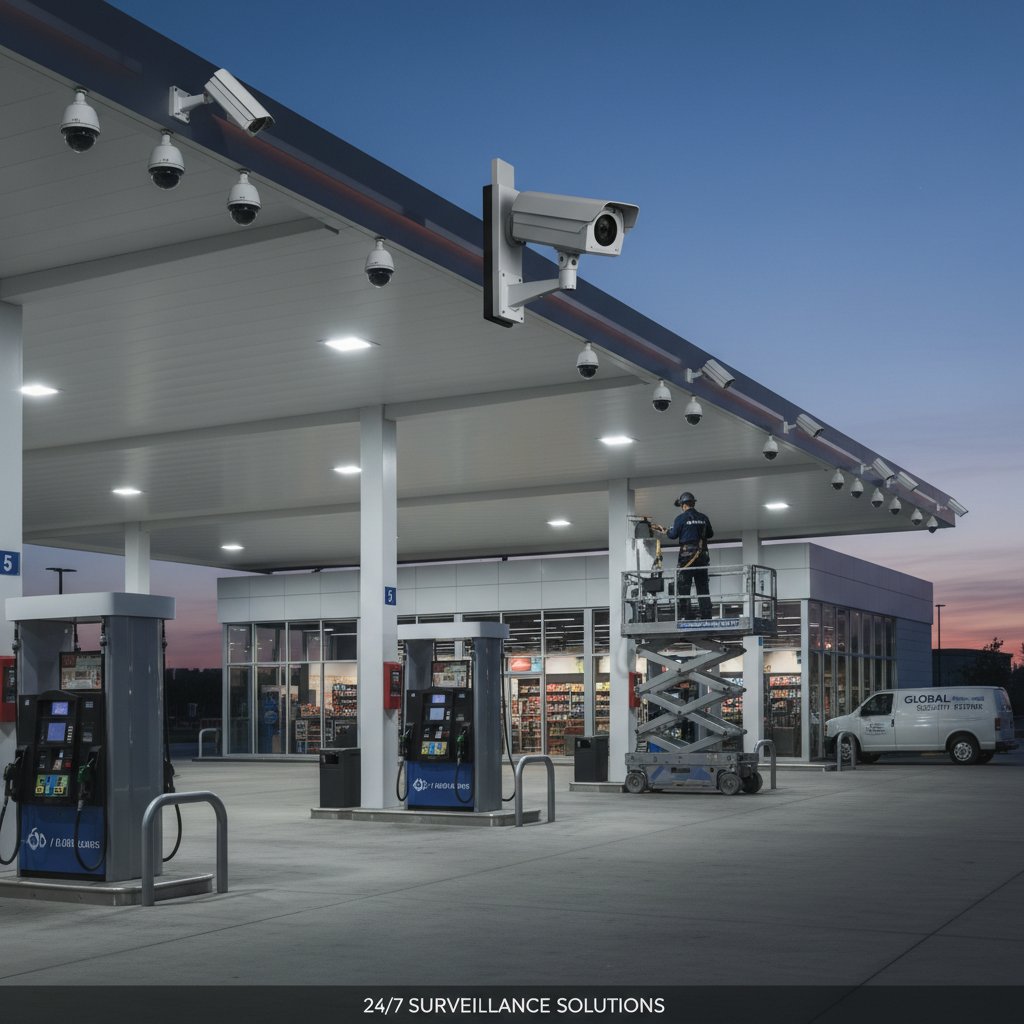
Gas Station Security Systems: Complete Installation Guide 2026
As someone who’s installed security systems across South Florida for over 15 years, I’ve seen how gas stations face unique security challenges. From fuel theft and drive-offs to vandalism and robbery attempts, these businesses operate 24/7 in environments that attract both legitimate customers and potential threats. The good news? Modern gas station security systems have evolved dramatically, offering comprehensive protection that’s both cost-effective and hurricane-resistant – crucial for our Florida climate.
Whether you’re a gas station owner or considering similar commercial security solutions for your business, this guide covers everything you need to know about designing, installing, and maintaining an effective security system in 2026.
Understanding Gas Station Security Vulnerabilities

Gas stations present multiple security challenges that require specialized solutions. During my years of commercial CCTV installation in Miami and throughout South Florida, I’ve identified the most critical vulnerabilities:
- Fuel theft and drive-offs: Customers who pump gas and leave without paying
- Point-of-sale theft: Both external robbery and internal employee theft
- Vandalism: Damage to pumps, signage, and property
- After-hours break-ins: Attempts to access cash registers, safes, or merchandise
- Skimming devices: Criminals installing card readers on payment terminals
- Loitering and vagrancy: Creating unsafe environments for customers
Each of these threats requires specific security measures, which is why a comprehensive approach works best. I’ve found that layered security systems – combining cameras, access control, lighting, and monitoring – provide the most effective protection.
Essential Components of Modern Gas Station Security Systems

High-Definition Camera Systems
The foundation of any gas station security system is a robust camera network. In 2026, I recommend installing a minimum of 8-12 cameras for a typical station, strategically positioned to cover:
- All fuel dispensers (multiple angles per island)
- Store entrance and exit points
- Cash register areas
- Parking areas and property perimeter
- Storage areas and back entrances
- ATM locations (if applicable)
For South Florida installations, I always specify cameras with IP66 or higher ratings to withstand our intense sun, frequent rain, and hurricane conditions. During Hurricane Ian preparations in 2022, the gas stations with properly weatherproofed systems maintained security coverage even during the storm.
Point-of-Sale Integration
Modern business security system installation in South Florida increasingly includes POS integration. This technology synchronizes your security cameras with register transactions, allowing you to:
- Review video footage of specific transactions
- Monitor employee behavior during cash handling
- Investigate discrepancies or theft claims
- Provide evidence for insurance claims or legal proceedings
Access Control Systems
Controlling who enters your facility and when is crucial for gas station security. I typically recommend installing access control on:
- Main store entrances (after hours)
- Employee-only areas
- Storage rooms and offices
- Fuel system control areas
Perimeter Security and Lighting
Proper lighting serves as both a deterrent and an enabler for your camera systems. LED lighting with motion sensors provides energy-efficient illumination that activates when movement is detected, drawing attention to potential security events while keeping operational costs manageable.
Planning Your Gas Station Security Installation

Site Assessment and Design
Every gas station has unique layout challenges. During the planning phase for retail security system installation, I conduct a thorough site survey that includes:
- Traffic flow analysis: Understanding customer and vehicle movement patterns
- Blind spot identification: Finding areas where traditional camera placement might miss activity
- Infrastructure evaluation: Assessing existing electrical and network capabilities
- Weather exposure assessment: Identifying equipment that needs enhanced protection
One recent installation in Coral Springs required creative camera positioning due to canopy support columns that created significant blind spots. By using a combination of dome cameras and strategically placed bullet cameras, we achieved complete coverage without compromising aesthetic appeal.
Choosing the Right Equipment
In 2026, I recommend focusing on IP-based systems that offer:
- 4K resolution minimum: Essential for license plate capture and facial recognition
- Night vision capabilities: Infrared or color night vision for 24/7 monitoring
- Wide dynamic range (WDR): Handles challenging lighting conditions common at gas stations
- Audio recording: Where legally permitted, adds valuable context to security events
- Smart analytics: Motion detection, line crossing, and loitering detection
Network and Storage Planning
Gas stations generate enormous amounts of video data. A typical 12-camera system recording at 4K resolution requires substantial storage capacity. I generally recommend:
- Network Video Recorders (NVRs) with redundant hard drives
- Minimum 30-day local storage (many insurance companies require this)
- Cloud backup for critical footage
- Dedicated network infrastructure to handle bandwidth requirements
Professional Installation Process
Pre-Installation Preparation
Successful professional security camera installation begins with thorough preparation. This includes:
- Obtaining necessary permits and ensuring compliance with local regulations
- Coordinating with utility companies for any electrical work
- Scheduling installation during low-traffic periods to minimize business disruption
- Preparing temporary security measures during system installation
Installation Best Practices
During installation, several factors are critical for long-term success:
Cable Management: In Florida’s climate, proper cable protection is essential. I use weatherproof conduit and ensure all connections are sealed against moisture intrusion. Hurricane-force winds can damage poorly secured cables, so proper mounting and strain relief are non-negotiable.
Camera Positioning: Height and angle are crucial. Cameras should be high enough to avoid tampering but low enough to capture clear facial images. I typically install cameras at 9-12 feet height with appropriate angled mounting.
Redundancy Planning: Critical areas receive coverage from multiple cameras. If one camera fails or is compromised, others maintain security coverage.
System Configuration and Testing
After physical installation, comprehensive system configuration includes:
- Setting up recording schedules and retention policies
- Configuring motion detection zones and sensitivity
- Setting up remote access for authorized users
- Testing all system functions under various lighting conditions
- Training staff on system operation and basic troubleshooting
Ongoing Maintenance and Monitoring
Regular Maintenance Schedule
Florida’s climate demands proactive maintenance. I recommend quarterly inspections that include:
- Cleaning camera lenses and housings
- Checking all cable connections
- Testing recording functions and storage capacity
- Updating firmware and security patches
- Verifying backup systems functionality
Hurricane Preparedness
As hurricane season approaches each year, gas stations need specific preparation protocols:
- Securing or removing portable equipment
- Backing up critical footage to off-site storage
- Testing generator connections for power backup
- Documenting pre-storm property conditions
Return on Investment and Insurance Benefits
A properly installed gas station security system typically pays for itself within 12-18 months through:
- Reduced theft losses: Both fuel drive-offs and merchandise theft
- Lower insurance premiums: Many insurers offer significant discounts for comprehensive security systems
- Improved employee accountability: Reducing internal theft and improving customer service
- Enhanced customer safety: Creating a safer environment that encourages repeat business
One Miami-area client reported a 60% reduction in drive-offs within three months of installation, while another saw a 40% decrease in overall theft incidents.
Compliance and Legal Considerations
Gas station security installations must comply with various regulations:
- Privacy laws: Proper signage indicating video surveillance
- Data retention requirements: Maintaining footage for specified periods
- Employee rights: Understanding what areas can and cannot be monitored
- Law enforcement cooperation: Ensuring systems can provide usable evidence
Future-Proofing Your Security Investment
Technology evolves rapidly, and 2026 brings new capabilities worth considering:
- AI-powered analytics: Advanced behavior detection and automatic alert systems
- Cloud-based monitoring: Professional monitoring services with immediate response capabilities
- Mobile integration: Smartphone apps for real-time monitoring and alerts
- Integration with other systems: Connecting security with fuel management and POS systems
Frequently Asked Questions
How much does a complete gas station security system cost?
A comprehensive gas station security system typically ranges from $15,000 to $40,000, depending on the number of cameras, storage requirements, and additional features like access control. This investment usually pays for itself within 12-18 months through reduced losses and insurance savings.
How long does installation take for a gas station security system?
Most gas station security installations take 2-4 days to complete, depending on the complexity of the system and existing infrastructure. We typically work during off-peak hours to minimize disruption to your business operations.
Can security cameras withstand Florida hurricanes?
Yes, when properly installed with appropriate weatherproof ratings (IP66 or higher) and secure mounting, security cameras can withstand hurricane conditions. We use reinforced mounting systems and weatherproof enclosures specifically designed for South Florida’s climate challenges.
Do I need special permits for gas station security camera installation?
Permit requirements vary by municipality, but most areas require electrical permits for security system installations. We handle all permit applications and ensure compliance with local regulations as part of our installation service.
How long should gas stations keep security footage?
Most insurance companies and legal requirements mandate keeping security footage for at least 30 days. However, we typically recommend 60-90 day retention for gas stations due to the time it may take to discover theft or fraud incidents.
Can I monitor my gas station security system remotely?
Absolutely. Modern systems include mobile apps and web portals that allow you to view live footage, receive alerts, and review recorded video from anywhere with an internet connection. This is particularly valuable for multi-location owners or during travel.
Protecting your gas station requires more than just cameras – it demands a comprehensive security strategy designed for your specific challenges and environment. With proper planning, professional installation, and ongoing maintenance, your security system will provide years of reliable protection while delivering measurable returns on your investment.
Ready to secure your gas station with a professional security system? Contact TechPro Security Systems for a free consultation and site assessment. Our team brings over 15 years of experience installing weather-resistant security solutions throughout South Florida, and we’ll design a system that protects your investment while fitting your budget.