
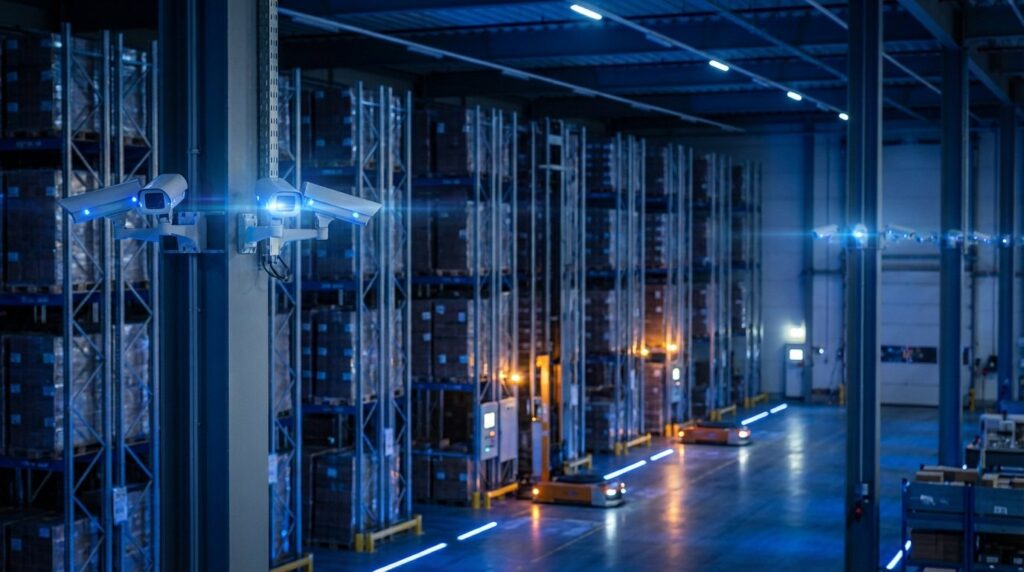
Warehouse Security Systems: Complete 2026 Protection Guide
Modern warehouse facilities face unprecedented security challenges. With supply chain disruptions costing businesses billions annually and cargo theft incidents increasing by 57% over the past three years, protecting warehouse assets has become mission-critical. Whether you manage a 500,000-square-foot distribution center or a smaller specialty storage facility, implementing comprehensive warehouse security systems is no longer optional—it’s essential for business continuity.
Today’s warehouse security solutions go far beyond traditional padlocks and guard patrols. Advanced technologies including AI-powered surveillance, smart access control, and integrated alarm systems create layered protection that adapts to modern threats. This guide explores the critical components, latest technologies, and strategic considerations for securing warehouse operations in 2026.
The Evolution of Warehouse Security Technology

Warehouse security systems have transformed dramatically. Early warehouse protection relied on perimeter fencing, basic locks, and periodic guard rounds. These manual approaches left significant gaps in coverage and response times.
In 2026, warehouse security operates as an integrated ecosystem. Video surveillance connects with access control databases, environmental sensors trigger automated responses, and artificial intelligence analyzes patterns to predict potential security breaches before they occur. This convergence delivers real-time threat detection and immediate response capabilities that manual systems cannot match.
The shift toward automation particularly benefits large-scale operations. A single security operator can now monitor multiple facilities simultaneously through centralized dashboards, with AI filtering false alarms and highlighting genuine threats. This efficiency reduces labor costs while improving security outcomes.
Core Components of Modern Warehouse Security Systems

Video Surveillance Infrastructure
Warehouse security cameras form the foundation of visual monitoring and evidence collection. Modern systems utilize high-definition cameras with wide dynamic range capabilities to handle challenging lighting conditions common in warehouse environments—from bright loading dock areas to darker storage zones.
Strategic camera placement covers critical zones including entry points, loading docks, inventory storage areas, and perimeter boundaries. Fixed cameras monitor specific high-value locations while pan-tilt-zoom (PTZ) cameras provide flexible coverage across larger open spaces. Typical warehouse deployments require 1 camera per 2,000-3,000 square feet of space, adjusted based on ceiling height and aisle configuration.
Network video recorders (NVRs) store footage with retention periods typically ranging from 30 to 90 days, depending on compliance requirements and storage capacity. Cloud-hybrid storage solutions offer off-site backup for critical footage while maintaining local recording for bandwidth efficiency.
Advanced features transforming warehouse surveillance include:
- AI-powered analytics: Automated detection of unauthorized personnel, abandoned objects, or unusual movement patterns
- License plate recognition: Automated logging of all vehicles entering and exiting the facility
- Heat mapping: Visualization of traffic patterns to identify security vulnerabilities
- Integration with inventory systems: Cross-referencing video with transaction logs to investigate discrepancies
For comprehensive insights on implementing advanced surveillance technology, explore best security systems for South Florida commercial properties in 2026.
Access Control Systems
Warehouse access control regulates who enters specific areas and when. Unlike traditional lock-and-key approaches, modern systems create detailed audit trails documenting every access event with timestamp and user identification.
Card-based systems remain popular for their balance of security and convenience. Employees receive proximity cards or key fobs that grant access to authorized zones based on role and shift schedule. Mobile credential systems increasingly supplement or replace physical cards, allowing employees to use smartphones for access.
Biometric authentication adds an additional security layer for high-value storage areas. Fingerprint scanners, facial recognition terminals, or iris readers ensure that credentials cannot be shared or stolen. Multi-factor authentication combining card credentials with biometric verification provides maximum security for restricted zones.
Warehouse access control extends beyond personnel doors to include:
- Vehicle gate controls with automated barrier arms
- Loading dock door management systems
- Elevator access restrictions for multi-level facilities
- Turnstiles or mantrap entries for high-security facilities
Cloud-based access control platforms enable centralized management across multiple warehouse locations. Security administrators can instantly modify permissions, lockdown facilities during emergencies, or generate compliance reports from any internet-connected device.
Intrusion Detection and Alarm Systems
Intrusion detection systems provide 24/7 monitoring when facilities are unoccupied or during off-hours. Modern industrial security systems combine multiple sensor technologies to detect unauthorized entry while minimizing false alarms.
Motion detectors using passive infrared (PIR) or dual-technology sensors identify movement in protected zones. Glass break detectors monitor windows and skylights. Door and window contacts trigger alerts when perimeter openings are breached. Vibration sensors detect attempts to cut through walls, roofs, or fencing.
Intelligent alarm systems distinguish between genuine threats and environmental factors. Pet-immune motion detectors prevent false alarms from warehouse cats or birds. Temperature compensation algorithms adjust sensitivity based on ambient conditions. Pattern recognition identifies characteristic signatures of forced entry versus benign activities.
Professional monitoring services receive alarm signals and dispatch appropriate responses—from contacting designated personnel to alerting law enforcement. Self-monitoring options allow security teams to receive notifications directly via mobile apps or central stations.
Environmental and Safety Monitoring
Comprehensive warehouse security extends beyond theft prevention to include environmental monitoring that protects inventory and personnel. Integrated sensors detect conditions that threaten assets or safety:
- Fire and smoke detection: Early warning systems integrated with suppression equipment
- Temperature monitoring: Critical for climate-sensitive inventory like pharmaceuticals or electronics
- Water leak detection: Prevents damage from plumbing failures or roof leaks
- Carbon monoxide sensors: Protects workers from dangerous gas accumulation near loading docks
These systems integrate with security platforms to trigger automated responses like activating ventilation systems, shutting down equipment, or initiating evacuation procedures.
Advanced Technologies Reshaping Warehouse Security
Artificial Intelligence and Machine Learning
AI-powered security cameras revolutionize warehouse monitoring by automating threat detection and reducing operator workload. Machine learning algorithms analyze video feeds in real-time, identifying security-relevant events and ignoring routine activities.
Computer vision technology recognizes specific objects, behaviors, and patterns. Systems can detect when forklifts enter unauthorized zones, identify individuals not wearing required safety equipment, or flag suspicious loitering near high-value inventory. These capabilities function continuously without human fatigue or attention gaps.
Predictive analytics examine historical security data to identify vulnerability patterns. By correlating theft incidents with factors like time of day, staffing levels, or inventory types, systems highlight elevated risk conditions that warrant additional monitoring or procedural changes.
Learn more about AI-powered security cameras and their ROI for property managers.
Thermal Imaging Technology
Thermal camera systems provide unparalleled perimeter security for warehouse facilities. Unlike conventional cameras that depend on visible light, thermal sensors detect heat signatures, making them effective in complete darkness, fog, or smoke conditions.
Perimeter thermal cameras create virtual tripwires along fence lines, detecting intruders before they breach facility boundaries. The technology distinguishes between humans, vehicles, and animals, reducing false alarms from wildlife while maintaining high detection accuracy.
For detailed information on implementing this technology, see thermal camera systems as perimeter security solutions.
Integration and Automation Platforms
Modern warehouse security achieves maximum effectiveness through system integration. Rather than operating as independent silos, surveillance, access control, alarms, and building management systems communicate through unified platforms.
When integrated systems detect an access control violation, cameras automatically focus on that location while recording begins. Alarms trigger door lockdowns, preventing unauthorized movement. Lighting systems activate, improving camera visibility and deterring intruders. These coordinated responses happen instantaneously without human intervention.
Open-platform architectures using standards like ONVIF (Open Network Video Interface Forum) ensure compatibility between equipment from different manufacturers. This flexibility prevents vendor lock-in and allows security systems to evolve as needs change.
Discover how automated security systems create comprehensive protection through intelligent integration.
Strategic Planning for Warehouse Security Implementation
Security Risk Assessment
Effective warehouse security begins with comprehensive risk assessment. Professional security consultants analyze facility-specific vulnerabilities considering factors like location, inventory value, building construction, and operational patterns.
Risk assessment identifies:
- High-value inventory requiring enhanced protection
- Perimeter weaknesses offering concealment or access opportunities
- Visibility limitations from building layout or lighting deficiencies
- Operational gaps during shift changes or low-staffing periods
- Compliance requirements for industry regulations or insurance policies
This analysis guides strategic equipment placement and system design, ensuring resources focus on genuine vulnerabilities rather than applying generic security templates.
Scalability and Future Expansion
Warehouse security systems should accommodate business growth without requiring complete replacement. Network-based architectures allow adding cameras, access points, or sensors as facilities expand or security needs evolve.
Infrastructure planning includes adequate network bandwidth, sufficient PoE (Power over Ethernet) capacity, and scalable storage solutions. Cloud-hybrid platforms eliminate concerns about on-premise server capacity while maintaining local recording reliability.
Integration with Operations
Security systems deliver maximum value when integrated with warehouse operations. Connecting surveillance with warehouse management systems (WMS) enables investigations that correlate video with transaction logs, identifying internal theft or process failures.
Access control data provides workforce management insights beyond security. Entry/exit logs verify attendance, track time in restricted areas, and support compliance documentation for regulated industries.
Cost Considerations and Return on Investment
Warehouse security system costs vary significantly based on facility size, technology selection, and integration complexity. Professional installations for mid-sized warehouses (50,000-100,000 square feet) typically range from $75,000 to $200,000, including equipment, installation, and initial configuration.
Cost components include:
- Cameras and recording equipment: $800-$3,000 per camera depending on resolution and features
- Access control infrastructure: $1,500-$3,500 per door including readers, locks, and controllers
- Intrusion detection: $5,000-$15,000 for comprehensive sensor coverage
- Network infrastructure: $10,000-$30,000 for switches, cabling, and wireless access points
- Professional installation and programming: 30-40% of equipment costs
Ongoing expenses include monitoring services ($50-$200 monthly), maintenance agreements (10-15% of system cost annually), and occasional equipment upgrades.
Return on investment manifests through multiple channels. Loss prevention directly impacts profitability—preventing a single cargo theft incident often justifies the entire security investment. Insurance premiums typically decrease 10-25% with certified security systems. Operational efficiency improvements from integrated access and surveillance systems reduce labor costs while improving safety compliance.
Regulatory Compliance and Industry Standards
Various industries face specific security requirements affecting warehouse system design. Pharmaceutical distributors must comply with DSCSA (Drug Supply Chain Security Act) requirements including restricted access and environmental monitoring. Food warehouses follow FSMA (Food Safety Modernization Act) guidelines. Defense contractors implement NISPOM (National Industrial Security Program Operating Manual) standards.
Professional security integrators understand these regulatory frameworks and design compliant systems with proper documentation. Compliance extends to data privacy regulations like GDPR or state-specific laws governing surveillance recording and retention.
Selecting Professional Security Integration Partners
Warehouse security systems require professional design and installation to function effectively. Licensed security integrators provide expertise that DIY approaches cannot match, from proper camera positioning to network architecture design.
Qualified security partners offer:
- Licensed, bonded, and insured technicians
- Manufacturer certifications demonstrating technical proficiency
- Experience with similar facility types and sizes
- Comprehensive warranties covering equipment and installation
- Ongoing technical support and maintenance services
- US-based support teams familiar with local conditions
Professional installation ensures optimal equipment performance, proper network configuration, and compliance with building codes. Extended warranties protect investments, while ongoing support relationships ensure systems remain effective as technology evolves.
Frequently Asked Questions
How to choose a warehouse security system?
Choosing warehouse security systems begins with professional risk assessment identifying your facility’s specific vulnerabilities and compliance requirements. Evaluate vendors based on relevant experience, technology capabilities, and ongoing support offerings. Prioritize integrated platforms that coordinate surveillance, access control, and alarms rather than standalone systems. Ensure scalability to accommodate business growth and technology evolution. Request references from similar warehouse facilities and verify proper licensing and certifications.
How much does a warehouse security system cost?
Warehouse security system costs range from $50,000 to $300,000+ depending on facility size, technology complexity, and integration requirements. Mid-sized facilities (50,000-100,000 square feet) typically invest $75,000-$150,000 for comprehensive protection including surveillance, access control, and intrusion detection. Factors affecting cost include camera count and quality, network infrastructure requirements, access control door count, monitoring services, and professional installation complexity. Request detailed proposals comparing equipment specifications, warranties, and support services.
What are the three types of security systems?
The three primary security system types for warehouses are: (1) Video surveillance systems using cameras and recording equipment to monitor facilities and collect evidence, (2) Access control systems regulating who enters specific areas using credentials like cards or biometrics, and (3) Intrusion detection systems using sensors and alarms to detect unauthorized entry. Modern warehouse protection integrates these three systems into unified platforms where components communicate and coordinate automated responses to security events.
What technology is used in warehouse security?
Warehouse security technology includes high-definition IP cameras with analytics capabilities, network video recorders with extended storage, card readers and electronic locks for access control, motion detectors and door contacts for intrusion detection, and thermal imaging cameras for perimeter monitoring. Advanced systems incorporate AI-powered video analytics, license plate recognition, biometric authentication, cloud-based management platforms, and integration with warehouse management systems. Mobile apps enable remote monitoring while IoT sensors detect environmental threats like fire, water leaks, or temperature deviations.
Secure Your Warehouse Operations
Comprehensive warehouse security systems protect valuable inventory, safeguard employees, and ensure business continuity. The investment in professional security technology delivers measurable returns through loss prevention, operational efficiency, and regulatory compliance.
Modern threats require modern solutions. Integrated systems combining intelligent surveillance, access control, and automated threat detection provide protection that adapts to evolving risks. Professional design and installation ensure optimal performance from day one, while scalable architectures accommodate future growth.
TechPro Security Products specializes in designing and installing warehouse security systems for South Florida commercial properties. Our licensed security professionals conduct comprehensive facility assessments, specify appropriate technologies, and deliver turnkey installations backed by extended warranties and US-based technical support. Contact us today for a free consultation and discover how advanced security technology can protect your warehouse operations.