
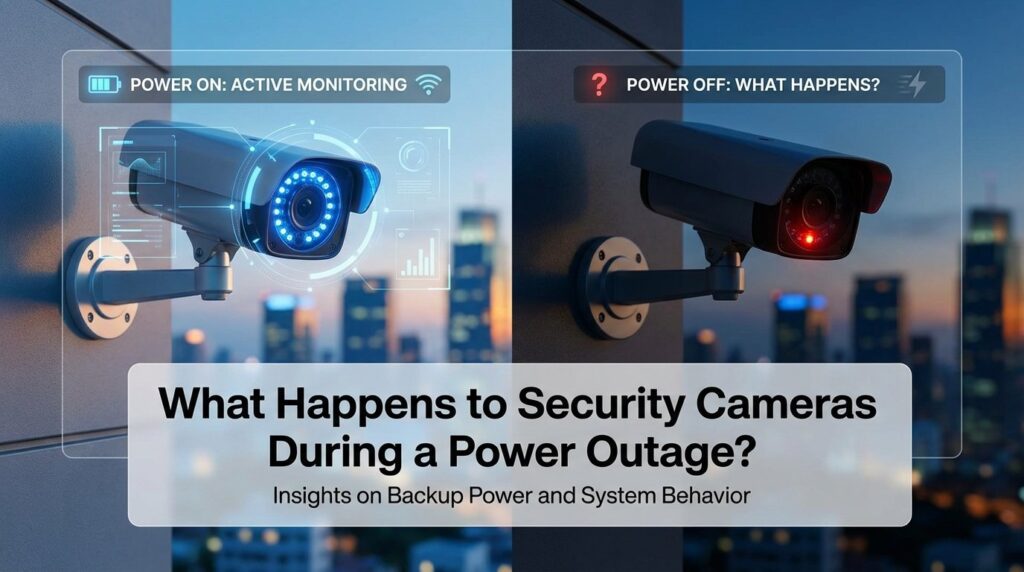
What Happens to Security Cameras During a Power Outage?
Power outages strike without warning, leaving properties vulnerable at the worst possible moments. When lightning strikes, storms roll through, or grid failures occur, most standard security cameras go dark immediately—creating blind spots that criminals can exploit. Understanding what happens to your surveillance system during a blackout and implementing proper backup solutions can mean the difference between continuous protection and critical security gaps when you need coverage most.
The reality is stark: most basic security camera systems stop functioning the moment power cuts out. However, modern professional systems offer sophisticated backup options that ensure continuous surveillance even during extended outages.
How Standard Security Cameras Respond to Power Loss
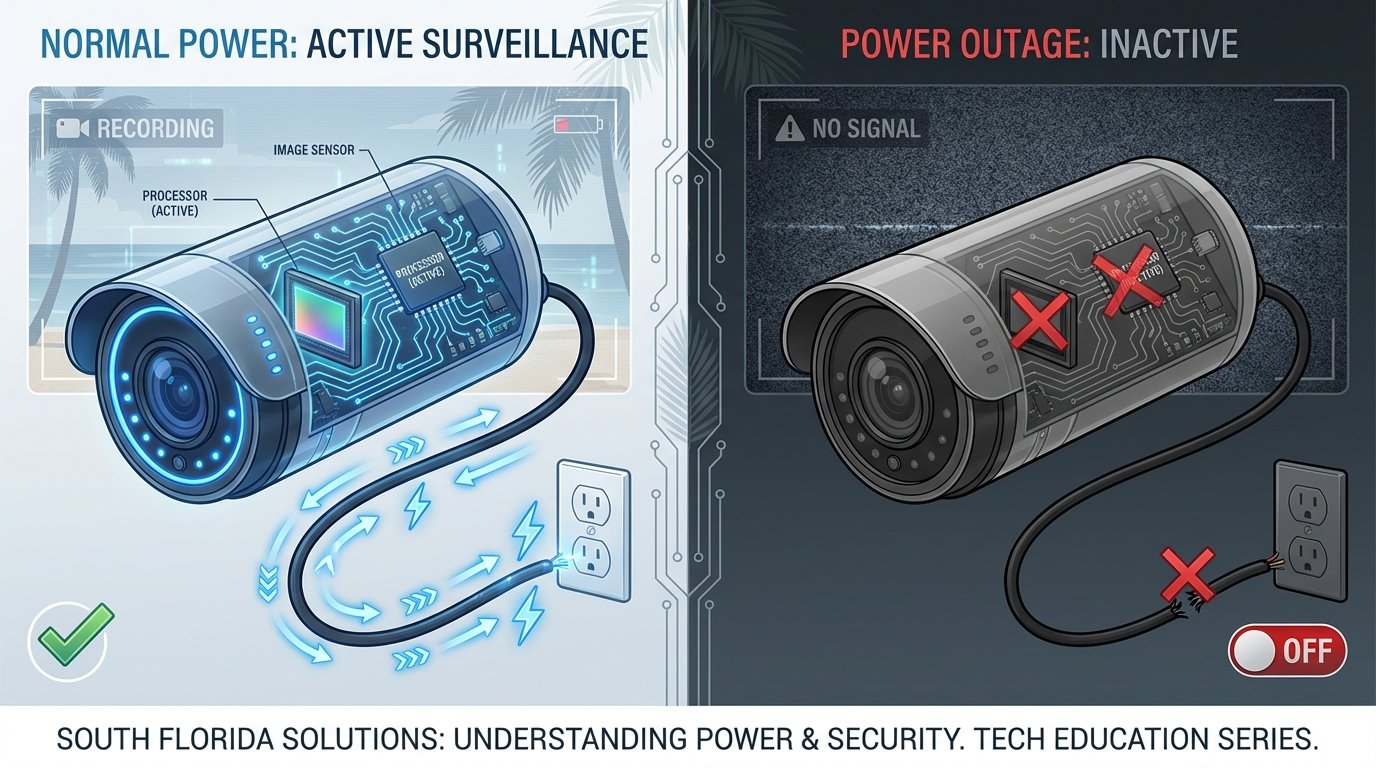
When power fails, traditional wired security cameras face immediate shutdown. These systems depend entirely on consistent electrical current to operate their image sensors, processing chips, and network connections. Without power, recording stops, live monitoring becomes impossible, and motion detection ceases functioning.
The typical sequence during a power outage follows this pattern:
- Camera feeds go black within seconds as capacitors drain
- Recording to Network Video Recorders (NVRs) or Digital Video Recorders (DVRs) stops immediately
- Network connectivity drops, eliminating remote viewing capabilities
- Motion alerts and notifications cease
- Any integrated lighting or infrared illumination shuts down
This vulnerability presents serious security risks. Properties become unmonitored precisely when they’re most vulnerable. Power outages often coincide with severe weather events or infrastructure problems—situations that may attract opportunistic criminals who recognize surveillance systems are likely offline.
Different Camera Types and Power Outage Resilience

Not all security cameras respond identically to power failures. Understanding the capabilities and limitations of various camera types helps businesses and property managers make informed decisions about their surveillance infrastructure.
Wired IP Cameras
Traditional wired IP cameras offer excellent image quality and reliability during normal operations, but they remain completely dependent on continuous power. These cameras connect via Ethernet cables, often receiving power through Power over Ethernet (PoE) technology. When building power fails, PoE cameras immediately stop functioning unless their network switch has battery backup. The recording equipment—typically an NVR—also requires separate backup power to continue storing footage.
Wireless Cameras with Battery Options
Some wireless security cameras include integrated rechargeable batteries. These cameras can continue operating during power outages, but with significant limitations. Battery-powered cameras typically reduce functionality to conserve energy, switching to lower resolution, decreasing frame rates, or activating only when motion is detected. Most consumer-grade battery cameras provide only 2-6 hours of continuous recording during outages, with longer durations possible in motion-activated modes.
Solar-Powered Surveillance Systems
Solar-powered cameras combine photovoltaic panels with battery storage, offering greater independence from grid power. These systems work well for remote locations or perimeter monitoring where electrical connections are impractical. However, they still face limitations during extended cloudy periods or nighttime outages when batteries must sustain operations without solar recharging.
Professional-Grade Systems with Integrated Backup
Enterprise-level surveillance systems designed for critical infrastructure incorporate multiple layers of power redundancy. These installations include UPS systems, backup generators, and sometimes even redundant recording equipment. Professional security cameras during power outage scenarios continue operating seamlessly because backup systems activate within milliseconds of detecting power loss.
The Critical Role of Backup Power Systems
Maintaining continuous surveillance during power failures requires deliberate planning and investment in backup power infrastructure. Several technologies provide varying levels of protection against outages.
Uninterruptible Power Supply (UPS) Solutions
A UPS for security system installations serves as the first line of defense against power interruptions. These devices contain batteries that instantly supply electricity when grid power fails, preventing even momentary gaps in coverage. UPS systems offer several advantages for security camera installations:
- Instantaneous switchover with zero downtime
- Protection against power surges and voltage fluctuations
- Runtime ranging from 30 minutes to several hours depending on capacity
- Clean, regulated power that extends equipment lifespan
Sizing a UPS properly requires calculating total power consumption of all connected devices. A typical commercial installation might include 8-16 cameras, an NVR, network switches, and a router. Professional assessments ensure UPS capacity matches actual requirements with appropriate runtime margins.
Battery Backup Systems
Dedicated security system battery backup solutions provide extended runtime beyond typical UPS capabilities. These systems use larger battery banks specifically designed for surveillance equipment. Professional installations often incorporate deep-cycle batteries capable of sustaining operations for 8-24 hours or longer.
Battery technology has advanced significantly, with lithium-ion options now offering superior performance compared to traditional lead-acid batteries. Lithium systems provide longer lifespans, faster charging, greater depth of discharge tolerance, and reduced maintenance requirements. For businesses requiring guaranteed surveillance during extended outages, properly sized battery banks represent essential infrastructure investments.
Generator Integration
Properties requiring indefinite surveillance capability during prolonged outages integrate backup generators into their security infrastructure. Generators running on natural gas, propane, or diesel fuel can sustain security systems for days or weeks. Automatic transfer switches detect power loss and start generators within seconds, ensuring minimal disruption.
Generator systems work most effectively when paired with UPS equipment. The UPS bridges the brief gap between power loss and generator startup, while the generator handles extended runtime requirements. This layered approach delivers enterprise-grade reliability suitable for critical facilities, data centers, and high-security environments.
Recording and Data Storage Considerations
Keeping cameras operational during outages solves only half the equation. Recording equipment must also maintain functionality to capture footage. Understanding data storage vulnerabilities during power failures helps organizations implement comprehensive backup strategies.
Network Video Recorder Protection
NVRs require continuous power to record incoming camera streams. Without backup power, cameras during blackout events may continue operating on their own batteries or UPS systems, but footage goes unrecorded if the NVR loses power. Professional installations always include NVRs in backup power calculations, ensuring recording continues uninterrupted.
Edge Recording Capabilities
Modern IP cameras increasingly incorporate edge recording functionality, storing footage directly to SD cards or internal memory. This distributed recording approach provides redundancy—if network connectivity or NVR power fails, cameras continue capturing footage locally. When power and connectivity restore, cameras synchronize stored footage back to the central recording system.
Edge recording proves particularly valuable during network failures that coincide with power issues. Even if PoE switches lose power but individual cameras have backup power, they continue recording locally until systems fully restore.
Cloud Storage Backup
Cloud-connected surveillance systems upload footage to remote servers, creating off-site backups that survive local power failures. However, cloud recording depends on functional internet connectivity. Power outages affecting local network equipment can interrupt cloud uploads even when cameras remain powered. Comprehensive backup strategies address both power and connectivity redundancy.
Calculating Power Requirements for Backup Systems
Implementing effective backup power for cameras requires accurate power consumption calculations. Undersized systems fail during the emergencies they’re designed to handle, while oversized systems waste resources.
Start by documenting power requirements for each component:
- Individual camera power consumption (typically 4-15 watts for IP cameras)
- NVR or DVR power draw (usually 40-250 watts depending on size)
- Network switches and routers (15-50 watts per device)
- Any additional equipment like monitors or access control systems
Add total wattage and multiply by 1.25 to provide a safety margin. This figure represents minimum UPS capacity. For runtime calculations, divide UPS watt-hour capacity by total system draw. A 1000VA/600W UPS supporting a 150W camera system provides approximately 4 hours of runtime under ideal conditions.
Professional installations account for battery degradation over time, temperature effects on capacity, and power quality requirements. These factors often increase recommended UPS sizing by 50-100% beyond basic calculations to ensure reliable long-term performance.
Best Practices for Power Outage Resilience
Building truly resilient surveillance systems requires implementing multiple protective layers. The most reliable installations incorporate these professional practices:
Regular Testing and Maintenance
Backup systems require periodic testing to ensure they’ll function when needed. Monthly simulated outages verify proper operation of UPS equipment, battery health, and automatic failover systems. Annual professional inspections assess battery condition, check electrical connections, and update firmware on intelligent UPS systems.
Staged Priority Systems
Not all cameras demand equal priority during limited backup power situations. Critical entry points, cash handling areas, and high-value storage zones merit extended runtime protection. Secondary cameras monitoring low-risk areas might operate on shorter backup windows. Intelligent power management systems can shed non-critical loads during extended outages, maximizing runtime for essential surveillance.
Environmental Protection
Backup batteries perform best within specific temperature ranges. Extreme heat accelerates degradation and reduces capacity, while cold temperatures temporarily diminish output. Professional installations locate UPS equipment in climate-controlled environments when possible, or specify industrial-grade equipment rated for harsh conditions.
Surge Protection Integration
Power returning after outages often includes voltage spikes that damage sensitive electronics. Quality UPS systems include surge suppression, but additional whole-system surge protection provides defense in depth. This layered approach protects expensive surveillance equipment from both outage-related damage and restoration surges.
Professional vs. DIY Approaches
While basic battery backup solutions are available to DIY installers, professional security integrations offer significant advantages for commercial applications. Professional installations provide:
- Accurate power load calculations ensuring adequate backup capacity
- Proper electrical integration meeting code requirements
- Coordinated shutdown and restart sequences protecting equipment
- Remote monitoring of backup system health and battery status
- Integration with building management systems and generators
- Professional maintenance programs ensuring long-term reliability
Commercial environments demand reliability that consumer-grade solutions rarely deliver. Professional security system battery backup installations undergo rigorous testing and documentation, providing the assurance critical operations require.
Special Considerations for South Florida Properties
South Florida’s unique environment creates specific challenges for security system power resilience. Hurricane season brings prolonged outages affecting wide areas, making extended backup runtime essential. Properties in coastal zones face additional vulnerability during storm events when security monitoring becomes most critical.
Lightning strikes and severe thunderstorms occur frequently throughout summer months, causing brief but damaging power fluctuations. Quality surge protection and UPS systems defend against these repetitive electrical threats that accumulate damage over time.
Salt air and humidity affect battery performance and equipment longevity in coastal installations. Professional integrators specify weather-resistant enclosures and maintenance schedules appropriate for marine environments, ensuring backup systems remain reliable despite harsh conditions.
Return on Investment for Backup Power Systems
Investing in comprehensive backup power infrastructure carries upfront costs that some organizations question. However, the ROI calculation extends beyond simple equipment pricing.
Consider potential losses during unmonitored outages: inventory theft, liability from unrecorded incidents, insurance claim complications without video evidence, and damage from undetected intrusions. A single significant loss event often exceeds the cost of proper backup systems multiple times over.
Insurance providers increasingly recognize the risk mitigation value of continuously monitored premises. Some carriers offer premium reductions for properties maintaining certified surveillance with documented backup power capabilities. These ongoing savings offset backup system costs over time.
Equipment protection represents another tangible benefit. UPS systems prevent damage from power surges and dirty power, extending the operational lifespan of expensive cameras and recording equipment. Reduced replacement frequency and lower maintenance costs contribute to positive long-term ROI.
Frequently Asked Questions
How long do security cameras work during a power outage?
Without backup power, wired security cameras stop immediately when power fails. Battery-powered wireless cameras may operate 2-6 hours continuously or longer in motion-activated mode. Professional systems with UPS or battery backup continue operating for durations determined by backup capacity—typically 4-24 hours or indefinitely with generator integration.
Will my security cameras work without internet during an outage?
Local recording to NVRs or DVRs continues functioning during internet outages if equipment has backup power. Cameras with edge recording store footage locally. However, remote viewing, cloud uploads, and mobile notifications require internet connectivity. Professional systems often include cellular failover for internet backup during power events affecting network equipment.
What size UPS do I need for my security camera system?
Calculate total wattage for all cameras, recorders, and network equipment, then multiply by 1.25 for a safety margin. A typical 8-camera commercial system drawing 200 watts requires a minimum 1000VA/600W UPS for approximately 3 hours runtime. Professional assessment ensures proper sizing for specific requirements and desired backup duration.
Do PoE cameras work during power outages?
PoE cameras depend on powered network switches. When building power fails, PoE cameras stop unless the switch has battery backup. Installing a UPS on the PoE switch maintains power delivery to all connected cameras, providing system-wide outage protection from a single backup point.
Should I include my security system in generator backup?
Properties with standby generators should absolutely include security systems in automatic transfer circuits. Surveillance represents critical infrastructure warranting generator protection, especially for commercial facilities. Pair generators with UPS equipment to bridge the startup gap and provide clean power regulation.
Protect Your Property with Professional Backup Solutions
Security cameras during power outage scenarios expose vulnerability gaps that criminals recognize and exploit. Whether brief flickers or extended hurricane-related blackouts, unprotected surveillance systems leave properties blind during critical moments. Professional backup power integration ensures continuous monitoring regardless of grid conditions.
TechPro Security Products specializes in designing resilient commercial surveillance systems for South Florida businesses and properties. Our professional security integrators assess your specific power requirements, recommend appropriate backup solutions, and implement systems engineered for reliable long-term performance. From UPS sizing to generator integration and remote monitoring, we deliver comprehensive power resilience tailored to your security needs.
Don’t wait for the next outage to discover your surveillance gaps. Contact TechPro Security Products today for a professional assessment of your security system power resilience and learn how proper backup infrastructure protects your investment when it matters most.