
Home Alarm System Cost: What You’ll Really Pay in 2026
Planning to install a home alarm system this year? You’re making a smart investment—but understanding the true cost of home alarm system installation goes far beyond the equipment price tag you see advertised online. With security technology evolving rapidly in 2026 and pricing structures becoming increasingly complex, many South Florida property owners find themselves confused about what they’ll actually spend.
The reality is that home alarm system pricing varies dramatically based on factors most homeowners don’t initially consider: professional versus DIY installation, monitoring contracts, smart home integration requirements, and whether you’re protecting a residential property or commercial facility. This comprehensive breakdown will help you understand exactly where your money goes and what value you’re receiving for each dollar spent.
Breaking Down the Cost of a Home Alarm System in 2026
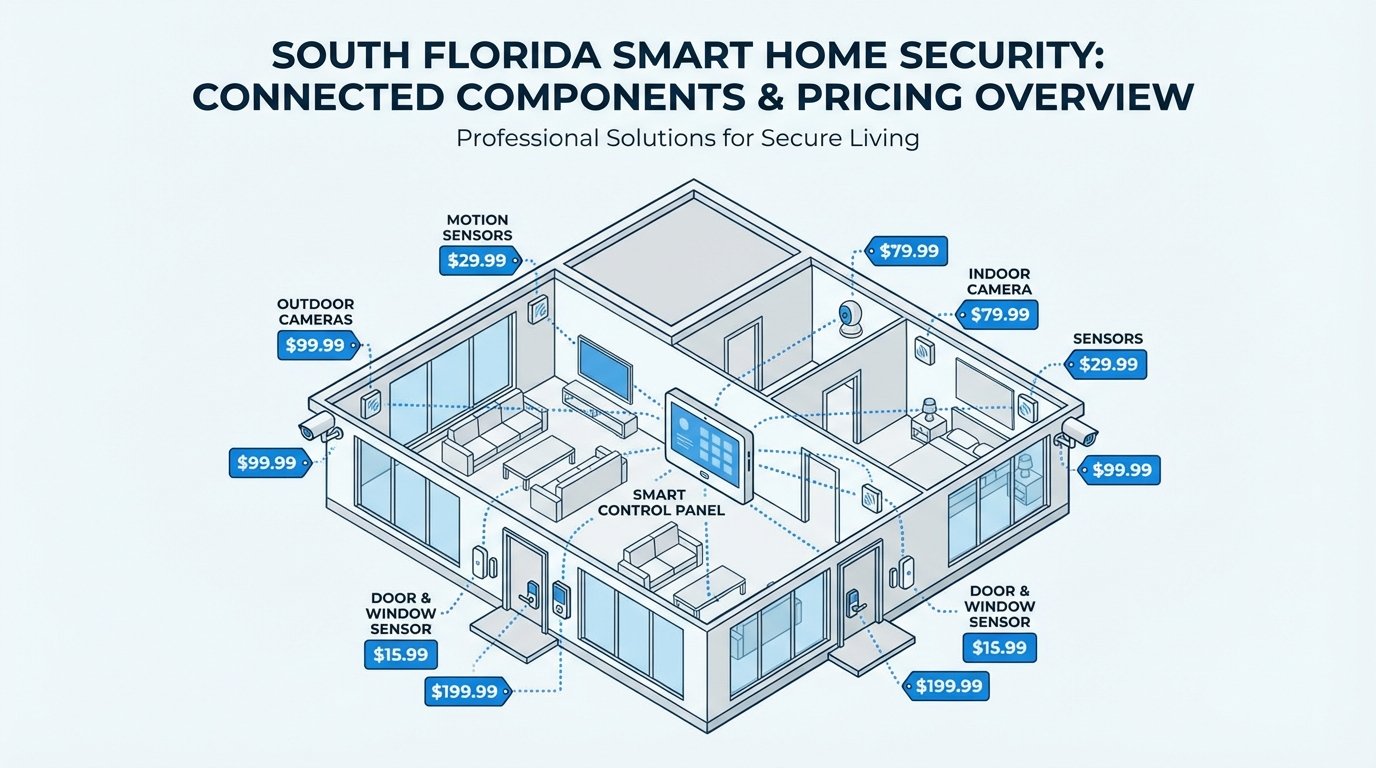
Modern security systems consist of multiple components working together to protect your property. Understanding each element helps you make informed decisions about where to invest your security budget.
Equipment Costs: The Foundation of Your Investment
The physical hardware represents your initial capital investment. For a professionally installed system protecting an average 2,000-square-foot home, expect these baseline costs:
- Control Panel: $150-$500 depending on wireless capability, cellular backup, and smart home integration features
- Door and Window Sensors: $25-$50 per sensor (typical homes need 10-15 sensors)
- Motion Detectors: $50-$100 each (usually 2-4 required for comprehensive coverage)
- Glass Break Sensors: $75-$150 each (recommended for rooms with multiple windows)
- Security Cameras: $100-$400 per camera for professional-grade models
- Keypad: $75-$200 for touchscreen models with wireless connectivity
- Sirens and Alarms: $50-$150 for indoor/outdoor alert systems
- Environmental Sensors: $60-$150 each (smoke, carbon monoxide, flood detection)
For basic professional monitoring-ready systems, total equipment costs typically range from $1,200 to $2,500. More sophisticated commercial-grade installations for businesses or larger properties can easily reach $5,000 to $15,000 or more, especially when integrating access control systems and extensive camera coverage.
Installation Costs: Professional vs. DIY
The alarm system installation cost represents a significant portion of your total investment, but the value proposition differs substantially between approaches.
Professional Installation: Licensed security integration companies typically charge $500-$1,500 for residential installations, with commercial projects ranging from $1,500-$5,000+ depending on complexity. This includes proper wire runs (when needed), strategic sensor placement, integration with existing infrastructure, programming, testing, and user training. Professional installers ensure your system meets local building codes and insurance requirements—critical factors often overlooked in DIY projects.
DIY Installation: Many consumer-grade systems market themselves as “free installation” since you’re providing the labor. However, factor in your time investment (typically 4-8 hours for someone without experience), potential mistakes requiring equipment replacement, and the learning curve associated with proper security coverage. Most importantly, DIY installations may not satisfy insurance discount requirements or commercial compliance standards.
For business owners and HOA communities, professional installation isn’t just recommended—it’s often mandatory for liability insurance coverage and proper documentation of security protocols.
Monthly Monitoring: The Ongoing Investment
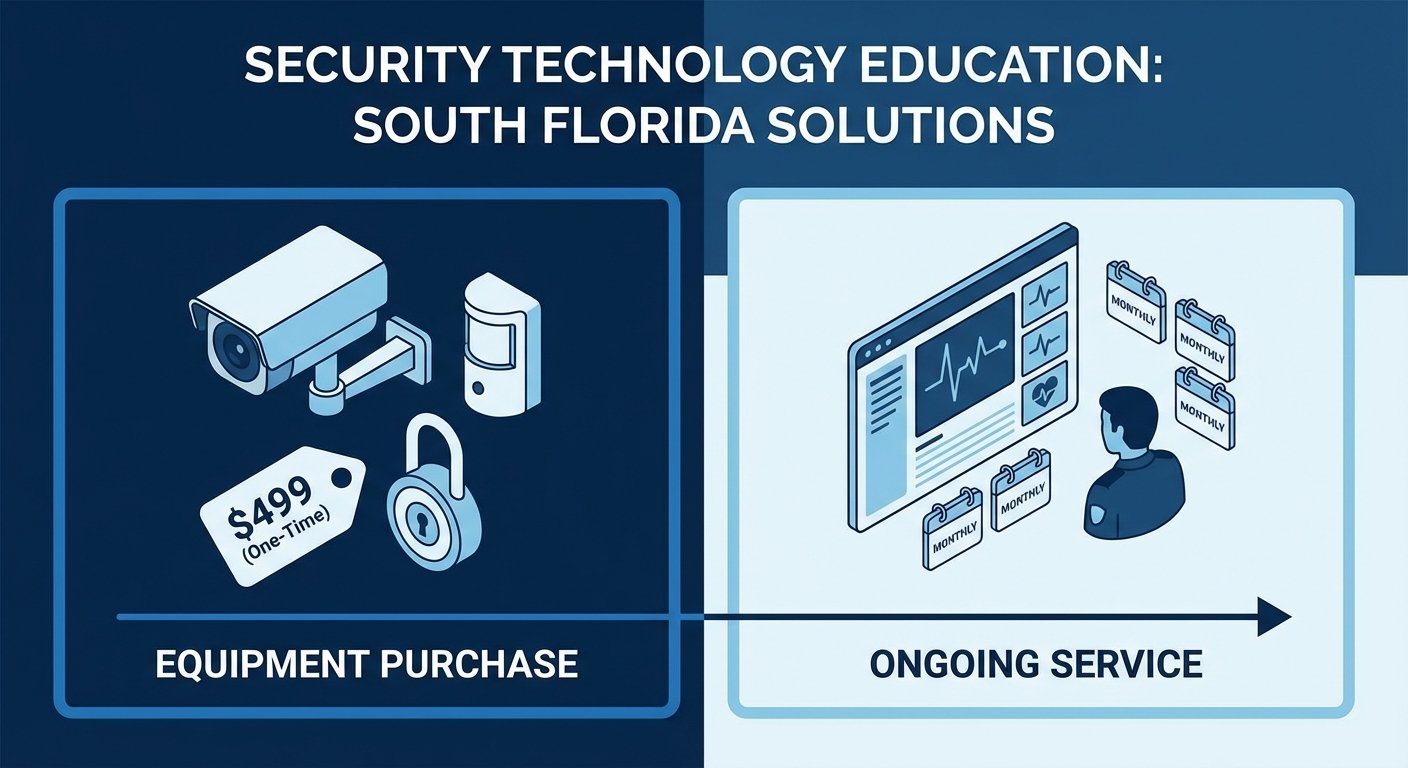
While equipment is a one-time cost, monitoring represents your long-term financial commitment. The security system cost breakdown must account for these recurring expenses that actually provide the active protection you’re seeking.
Professional Monitoring Services
Professional monitoring centers operate 24/7/365, responding to alarm triggers within seconds. When your system detects an intrusion, fire, or environmental emergency, trained operators assess the situation and dispatch appropriate emergency services.
In 2026, professional monitoring costs typically fall into these ranges:
- Basic Monitoring: $25-$40/month for intrusion detection with cellular backup
- Full-Service Monitoring: $40-$60/month including fire, carbon monoxide, and medical alerts
- Video Verification Monitoring: $50-$80/month incorporating camera footage review for alarm verification
- Commercial Monitoring: $60-$200+/month depending on property size, number of zones, and response requirements
Most monitoring contracts require 1-3 year commitments. While this locks you into monthly payments, it often reduces the upfront equipment cost significantly, as providers subsidize hardware when you commit to monitoring services.
Self-Monitoring Options
Self-monitoring systems send alerts directly to your smartphone, placing response decisions in your hands. Monthly costs run $10-$25 for cloud storage, app access, and cellular connectivity. While cheaper, self-monitoring means you’re responsible for assessing situations and calling emergency services yourself—potentially problematic during vacations, work emergencies, or nighttime incidents.
For commercial properties, self-monitoring generally fails to meet insurance requirements and regulatory compliance standards, making professional monitoring essentially non-negotiable.
Smart Home Integration and Advanced Features
Modern alarm systems in 2026 extend far beyond simple intrusion detection. Integration with smart home platforms, automation capabilities, and advanced analytics add both functionality and cost.
Home Automation Integration
Integration with platforms like Amazon Alexa, Google Home, or Apple HomeKit typically adds $200-$500 to equipment costs, plus potential monthly fees ($5-$15) for enhanced automation features. These integrations allow voice control, automated lighting responses during alarms, and integration with smart locks and thermostats.
For South Florida residents, smart integration becomes particularly valuable during hurricane season, allowing remote monitoring of property conditions, water leak detection, and power outage notifications even when evacuated.
Video Surveillance Add-Ons
Integrating cameras into your alarm system provides visual verification and recording capabilities. Cloud storage for video footage typically costs:
- $10-$20/month for 1-2 cameras with 7-day storage
- $20-$40/month for 3-5 cameras with 14-30 day storage
- $50-$100/month for unlimited cameras with extended storage periods
Local storage options (DVR/NVR systems) eliminate monthly fees but require upfront hardware investment ($300-$1,500) and lack remote redundancy if equipment is stolen or damaged.
Hidden Costs and Ongoing Expenses
Comprehensive understanding of home alarm system pricing requires acknowledging expenses that don’t appear in initial quotes but impact your total cost of ownership.
Maintenance and Service Calls
Professional systems typically require annual maintenance ($100-$200) to test sensors, update firmware, and replace batteries. Many companies include this in monitoring contracts, but verify before signing.
Service calls for repairs, sensor replacements, or system upgrades typically cost $100-$150 per visit plus parts. Battery replacements for wireless sensors run $10-$30 per unit every 3-5 years.
Cellular Backup Communication
Modern systems use cellular connections as primary or backup communication paths (since landlines are obsolete and internet connections can be cut). Cellular service typically costs $10-$25/month, though it’s often included in monitoring fees.
Permit Fees and False Alarm Fines
Many municipalities require alarm permits ($25-$100 annually). Additionally, false alarms can result in fines starting at $50-$100 for the first occurrence and increasing substantially with repeated incidents. Professional monitoring with video verification dramatically reduces false alarm rates.
Cost Comparison: Consumer DIY vs. Professional Systems
Understanding the true cost difference between consumer-grade DIY systems and professionally installed solutions requires examining the complete ownership picture over a typical 5-year period.
DIY Consumer System (5-Year Total)
- Equipment: $400-$800 (initial purchase)
- Self-monitoring service: $15/month × 60 months = $900
- Cloud storage: $10/month × 60 months = $600
- Battery/sensor replacements: $200-$400
- Total 5-Year Cost: $2,100-$2,700
Professional System with Monitoring (5-Year Total)
- Equipment: $1,500-$2,500
- Professional installation: $800-$1,200
- Monitoring: $45/month × 60 months = $2,700
- Annual maintenance: $150/year × 5 = $750
- Cellular backup: Usually included in monitoring
- Total 5-Year Cost: $5,750-$7,150
The professional system costs roughly 2.5 times more over five years. However, this comparison misses critical value differences: professional-grade equipment durability, verified response to emergencies, insurance discounts (typically 10-20% on homeowners insurance), compliance with commercial requirements, and significantly lower false alarm rates.
For commercial properties, HOA common areas, and business facilities, the comparison becomes irrelevant—professional installation and monitoring are typically mandatory for insurance coverage and regulatory compliance.
Commercial vs. Residential Security System Costs
Commercial security installations involve substantially different cost structures due to larger coverage areas, compliance requirements, and liability considerations.
Commercial Security System Pricing
Small businesses (retail stores, offices) typically invest $3,000-$8,000 for comprehensive security including access control, cameras, and intrusion detection. Larger commercial facilities, warehouses, or multi-building campuses may require $15,000-$50,000+ for proper coverage.
Commercial systems often integrate with fire alarm systems, access control for employee management, and video analytics for operational insights—capabilities that drive costs higher but provide essential business value beyond security.
HOA and Multi-Family Properties
Homeowners associations and multi-family properties in South Florida frequently require security for common areas, gates, pools, and clubhouses. These installations typically cost $5,000-$25,000 depending on property size and amenities being protected. Monthly monitoring costs $100-$300+ based on the number of monitored zones and required response protocols.
Insurance Discounts and ROI Considerations
While focusing on upfront costs, many property owners overlook the financial benefits that offset security system expenses.
Homeowners Insurance Savings
Most insurance carriers offer 5-20% discounts for professionally monitored alarm systems. On a typical South Florida homeowners policy costing $2,000-$4,000 annually, this represents $100-$800 in yearly savings. Over a 10-year period, insurance discounts alone can offset a significant portion of your security investment.
Critically, many insurers only provide discounts for UL-listed professionally installed and monitored systems—DIY solutions often don’t qualify.
Property Value and Marketability
Professionally installed security systems increase property values and marketability. In competitive real estate markets, comprehensive security infrastructure serves as a selling point, particularly for luxury properties and commercial facilities where security is an expected amenity rather than an upgrade.
Making the Right Investment Decision
Determining the appropriate security investment requires honest assessment of your needs, risk tolerance, and budget constraints.
Questions to Guide Your Decision
Consider these factors when evaluating security system options:
- Is this for a residential property or commercial facility requiring compliance standards?
- Do you need insurance discounts to justify the investment?
- How often is the property unoccupied (vacation home, business after-hours)?
- What’s your tolerance for false alarms and self-management of emergencies?
- Do local regulations require permits or professional installation?
- Will you need integration with access control, intercoms, or gate systems?
- Are environmental monitors (flood, temperature) necessary for your location?
When Professional Installation Makes Sense
Professional installation becomes the clear choice for commercial properties, rental properties (where liability matters), luxury homes (where insurance requirements are strict), and properties requiring integration with existing building systems. Additionally, HOA communities, gated neighborhoods, and multi-family properties require professional-grade solutions to meet management company and insurance carrier requirements.
Frequently Asked Questions
What is the average cost of a home alarm system in 2026?
For professionally installed systems, expect total first-year costs of $2,000-$4,000 including equipment, installation, and monitoring. DIY systems range from $300-$800 upfront plus $10-$30 monthly for services. Commercial systems start at $3,000-$5,000 for small businesses and scale upward based on facility size and requirements.
Are there hidden costs I should know about?
Common overlooked expenses include annual permit fees ($25-$100), cellular backup service (sometimes separate from monitoring), battery replacements every 3-5 years, potential false alarm fines, and service call fees for repairs or adjustments outside warranty coverage.
Can I save money by installing the system myself?
DIY installation eliminates the $500-$1,500 installation fee but may not qualify for insurance discounts, creates liability concerns for rental properties, and doesn’t meet commercial compliance requirements. Your time investment and learning curve should also be factored into the cost comparison.
How much can I save on insurance with a monitored alarm system?
Most carriers offer 5-20% discounts for UL-listed professionally monitored systems. On a typical policy, this translates to $100-$800 annually. Over the system’s lifetime, these savings substantially offset the monitoring costs.
What’s the difference between cheap and expensive alarm systems?
Higher-cost professional systems offer commercial-grade equipment with longer lifespans, UL certification for insurance compliance, professional installation ensuring proper coverage, verified monitoring with faster emergency response, and integration capabilities with access control and building automation systems.
Protecting Your Investment with TechPro Security Products
Understanding the cost of home alarm system installation represents just the first step in protecting your property. The real value comes from partnering with experienced professionals who design systems matched to your specific security challenges and compliance requirements.
TechPro Security Products specializes in professional security integration for South Florida commercial properties, HOAs, and businesses requiring reliable protection and regulatory compliance. Our licensed technicians design customized solutions incorporating access control systems, video surveillance, and intrusion detection that meet insurance requirements and provide genuine security value—not just monitored alarms.
Whether you’re protecting a commercial facility, managing an HOA community, or securing a business operation, we provide transparent pricing, professional installation, and ongoing support that ensures your security investment delivers lasting protection and peace of mind. Contact TechPro Security Products today for a comprehensive security assessment and customized proposal that addresses your specific requirements and budget.