
Gas Station Security Systems: Complete Protection Guide for Florida
Gas stations face a unique convergence of security challenges that few other businesses experience. With 24/7 operations, high-volume cash transactions, isolated locations, and unmanned hours, these facilities become prime targets for theft, vandalism, and violent crime. In Florida, where over 8,000 gas stations serve millions of residents and tourists annually, the stakes are particularly high. A single security incident can result in thousands of dollars in losses, liability claims, and irreparable damage to your business reputation.
Professional gas station security systems have evolved far beyond basic surveillance cameras. Modern solutions integrate multiple protection layers—from AI-powered video analytics and license plate recognition to remote monitoring and point-of-sale integration—creating a comprehensive security ecosystem designed specifically for the petroleum retail environment.
Why Gas Stations Require Specialized Security Systems
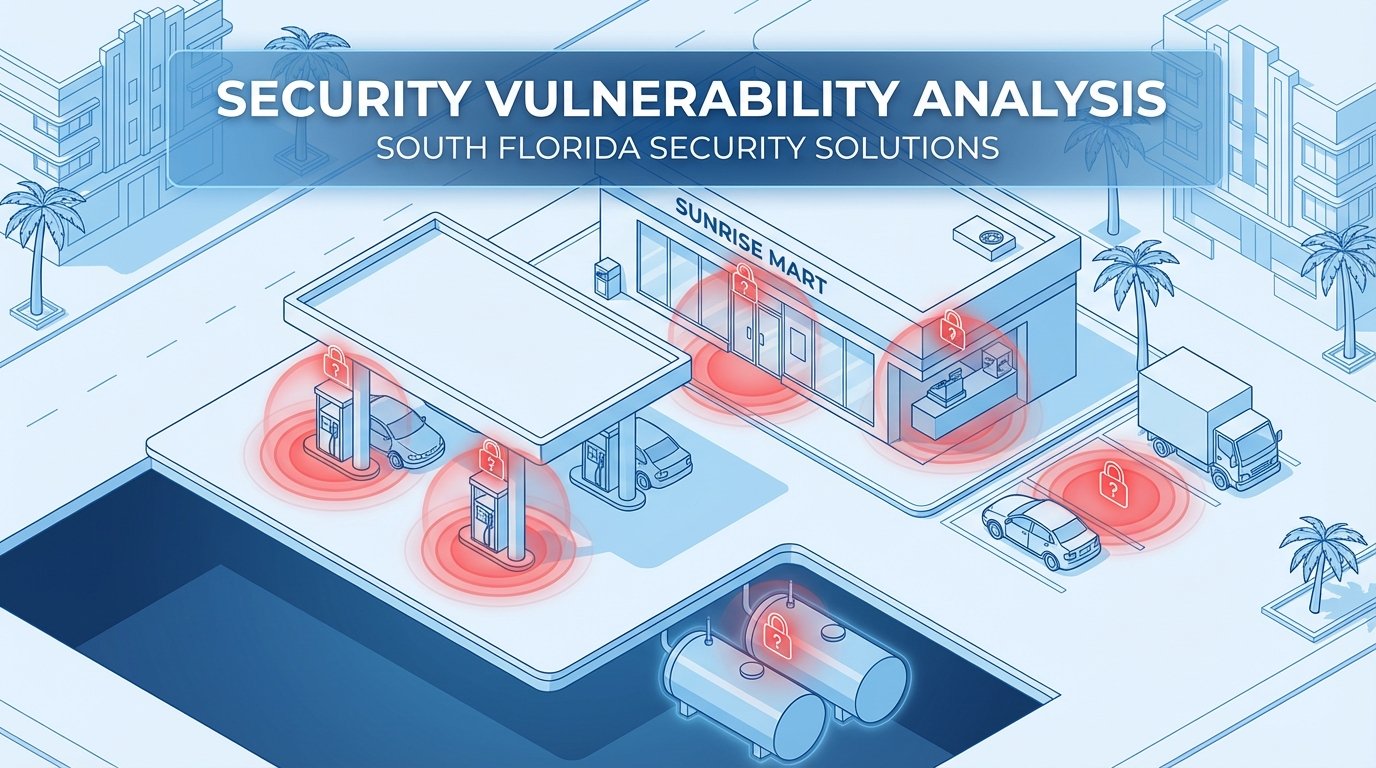
The security needs of gas stations differ dramatically from typical retail establishments. Understanding these unique vulnerabilities is the first step toward implementing effective protection.
Multiple Points of Vulnerability
Gas stations present numerous security challenges simultaneously. The fuel dispensing area, convenience store, car wash facilities, and perimeter boundaries each require different security approaches. Unlike enclosed retail stores, gas stations feature large open areas with multiple entry and exit points, making traditional security measures insufficient.
Pump-and-run incidents alone cost the petroleum industry over $150 million annually nationwide. Florida’s transient population and tourist traffic compound this issue, with many perpetrators crossing state lines before detection. Additionally, gas stations store valuable inventory in both the retail space and underground fuel tanks, creating attractive targets for organized theft rings.
24/7 Operations and Staffing Challenges
Most gas stations operate around the clock with minimal staff, particularly during overnight hours when criminal activity peaks. Single-employee shifts create safety concerns and eliminate the traditional “buddy system” security approach. A comprehensive gas station security system must function as a force multiplier, extending the awareness and response capabilities of limited personnel.
Remote video monitoring has become essential for Florida gas station owners managing multiple locations. Real-time surveillance allows security professionals to monitor all facilities from a central location, providing immediate response to suspicious activity regardless of on-site staffing levels.
Essential Components of a Gas Station Security System
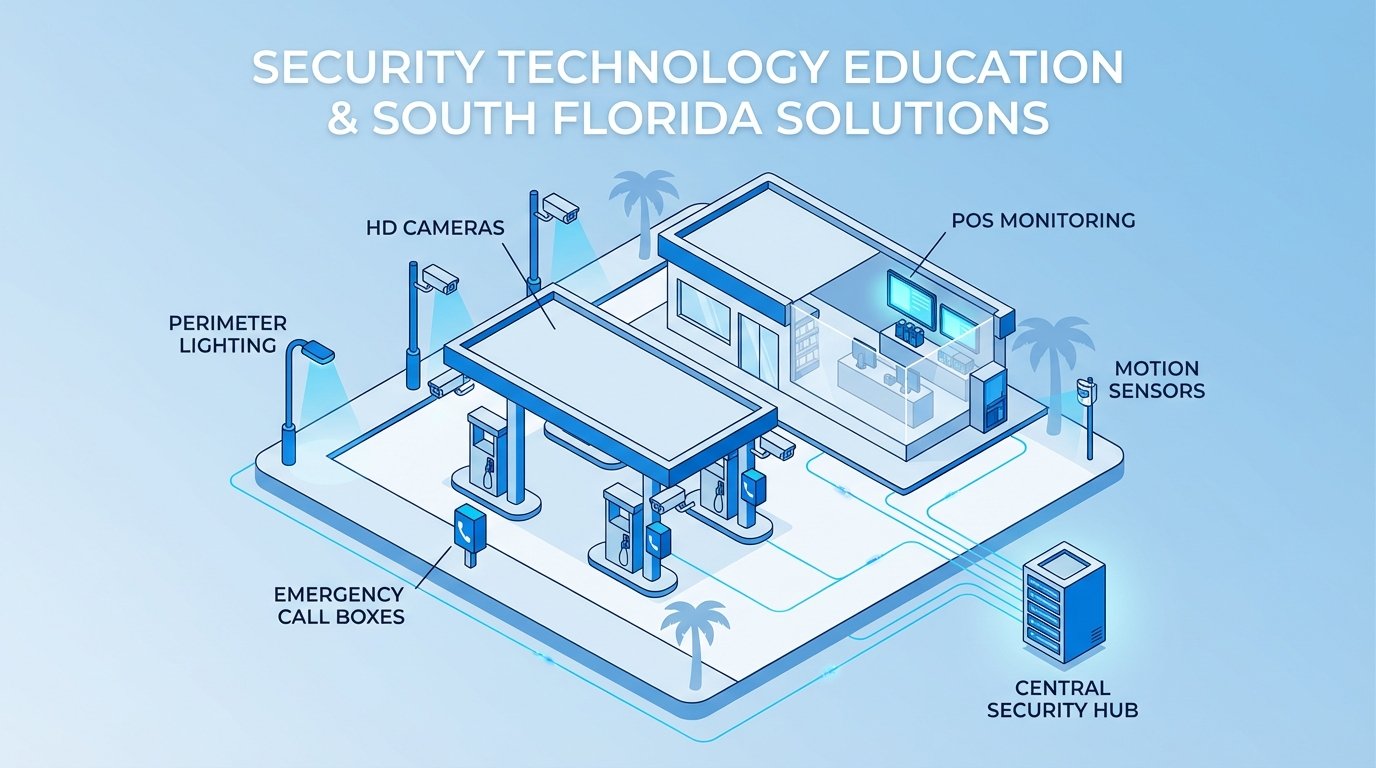
Effective security for petroleum retail facilities requires multiple integrated technologies working in concert. Each component serves specific functions while contributing to overall protection.
High-Definition Surveillance Cameras
Video surveillance forms the foundation of any gas station security system. However, not all cameras meet the demanding requirements of petroleum retail environments. Professional installations require cameras with specific capabilities:
- Wide Dynamic Range (WDR): Essential for capturing clear images despite challenging lighting conditions, including bright sunlight, headlight glare, and varying canopy lighting
- High resolution (minimum 4MP): Necessary for identifying faces, reading license plates, and capturing transaction details at point-of-sale terminals
- Weather-resistant housings: Florida’s climate demands cameras rated for extreme heat, humidity, and hurricane-force winds
- Low-light performance: Specialized sensors and infrared illumination ensure clear footage during overnight hours without visible lighting that might disturb neighbors
- Vandal-resistant construction: IK10-rated impact resistance protects cameras from tampering and deliberate damage
Strategic camera placement is equally critical. Fuel pump islands require overhead coverage capturing vehicle approaches, driver interactions, and license plates. Canopy-mounted cameras must angle downward to minimize headlight glare while maintaining facial recognition capability. Convenience store entrances need dedicated cameras positioned at eye level for positive identification.
License Plate Recognition (LPR) Technology
License plate recognition cameras have become indispensable for gas station security. These specialized cameras capture plate numbers of every vehicle entering the property, creating an automated database for investigating incidents and preventing fuel theft.
Modern LPR systems integrate with point-of-sale terminals, automatically associating plate numbers with transaction data. When a pump-and-run occurs, operators can immediately retrieve the vehicle description, plate number, and exact time of the incident. Many Florida law enforcement agencies now accept LPR footage as primary evidence for prosecution.
Advanced LPR systems maintain databases of known offenders, triggering real-time alerts when previously identified theft suspects return. This proactive capability transforms security from reactive investigation to active prevention.
Point-of-Sale Integration
Integrating security cameras with your POS system creates a powerful tool for investigating both external theft and internal fraud. POS integration overlays transaction data directly onto video footage, allowing you to see exactly what was purchased, how it was paid for, and who handled the transaction.
This integration proves invaluable for resolving payment disputes, identifying cashier errors versus intentional theft, and providing evidence for credit card chargebacks. When customers claim they didn’t authorize a transaction or received incorrect change, synchronized video and transaction data provide definitive answers.
Remote Video Monitoring Services
Remote video monitoring represents the evolution from passive recording to active threat prevention. Professional monitoring centers staff trained security personnel who watch your facility in real-time, responding immediately to suspicious activity.
When motion is detected in restricted areas during closed hours or suspicious behavior occurs at fuel pumps, remote operators can issue audio warnings through on-site speakers, contact law enforcement, or alert management. This immediate response often prevents crimes before they occur, dramatically reducing losses compared to discovering incidents hours or days later during video review.
For Florida gas station owners managing multiple locations, remote monitoring provides consistent security coverage without multiplying staff costs. A single monitoring contract protects all facilities simultaneously, delivering professional oversight at a fraction of the cost of hiring additional on-site security personnel.
Advanced Features for Maximum Protection
Beyond basic surveillance, modern gas station security systems incorporate intelligent features that enhance protection and operational efficiency.
Video Analytics and Artificial Intelligence
AI-powered video analytics transform security cameras from passive recording devices into intelligent monitoring systems. These capabilities include:
- Loitering detection: Alerts when individuals remain in specific areas beyond defined time thresholds
- Perimeter intrusion: Triggers notifications when people enter restricted zones like fuel tank access areas
- Object removal detection: Identifies when items are taken from displays or storage areas
- Crowd formation: Detects unusual gatherings that might indicate disturbances
- Vehicle counting: Tracks traffic patterns for business intelligence and staffing optimization
These analytics reduce the burden on security personnel by filtering out normal activity and highlighting only events requiring attention. Rather than watching hours of uneventful footage, operators receive targeted alerts about genuinely suspicious behavior.
Access Control Systems
While video surveillance monitors public areas, access control systems protect restricted spaces. Gas stations contain multiple areas where unauthorized access poses security risks or regulatory violations: back offices with safes, storage rooms with high-value inventory, fuel system controls, and environmental compliance equipment.
Professional access control systems using key cards or biometric readers create audit trails showing exactly who entered restricted areas and when. This accountability deters internal theft while providing evidence if incidents occur. Integration with video surveillance automatically triggers recordings when controlled doors open, documenting who accessed protected spaces.
Alarm Systems and Panic Buttons
Despite comprehensive video coverage, employees need immediate ways to summon help during emergencies. Modern panic button systems allow discrete activation during robberies or confrontations, instantly notifying law enforcement and triggering alarm monitoring center response.
Silent alarms prove particularly valuable during robbery situations, allowing employees to summon help without escalating danger. Advanced systems include personal panic pendants for employees working alone, ensuring protection regardless of their location on the property.
Commercial CCTV Installation Considerations for Florida Gas Stations
Proper installation separates effective security systems from expensive failures. Florida’s unique environmental conditions and regulatory landscape require specialized expertise.
Hurricane-Rated Equipment and Installation
Florida’s hurricane exposure demands security equipment designed to withstand extreme weather. Camera mounting systems must meet wind load requirements for your specific location—coastal areas require more robust installations than inland facilities. Cabling must be properly secured and protected against wind damage, with service loops allowing for building movement during storms.
Backup power systems ensure security coverage continues during outages that frequently follow severe weather. Battery backup provides several hours of operation, while generator integration enables indefinite protection during extended outages common after major hurricanes.
Network Infrastructure and Bandwidth
Modern IP-based security systems require robust network infrastructure. A typical gas station security system with 16-24 high-definition cameras generates substantial data traffic, particularly when multiple cameras stream simultaneously to remote monitoring centers.
Professional commercial CCTV installation in Miami and throughout South Florida includes network assessment and optimization. This ensures adequate bandwidth for security systems without compromising other business operations like credit card processing or inventory management systems. Proper network segmentation isolates security traffic from other systems, maintaining performance and protecting sensitive data.
Compliance with Petroleum Industry Regulations
Gas stations operate under specific regulatory requirements affecting security system installation. Cameras and equipment installed near fuel dispensing areas must meet electrical code requirements for classified locations. Improper installations create fire hazards and expose owners to liability.
Working with licensed security integration companies familiar with petroleum retail regulations ensures compliant installations that satisfy insurance requirements and pass regulatory inspections.
Security Cameras for Businesses: ROI Beyond Loss Prevention
While preventing theft and vandalism drives most security investments, comprehensive surveillance systems deliver additional operational benefits that enhance return on investment.
Liability Protection
Gas stations face constant liability exposure from slip-and-fall claims, vehicle accidents on property, and disputes over fuel quality or transaction amounts. Video evidence provides definitive documentation of incidents, protecting owners from fraudulent claims while ensuring legitimate claims are handled appropriately.
Insurance carriers increasingly offer premium discounts for gas stations with professional security systems, recognizing the reduced claim frequency and faster resolution these systems enable. Many carriers now require minimum security measures as conditions of coverage.
Employee Performance and Training
Security cameras provide valuable insights into employee performance, customer service quality, and operational efficiency. Reviewing footage helps identify training needs, recognize excellent service for positive reinforcement, and document policy violations requiring corrective action.
This operational visibility proves particularly valuable for multi-location operators who cannot personally supervise all facilities constantly. Video evidence removes ambiguity from personnel decisions, providing clear documentation that protects businesses from wrongful termination claims.
Business Intelligence
Modern video analytics extract business intelligence from security footage. Vehicle counting reveals peak traffic times, informing staffing decisions and marketing timing. Customer movement patterns within convenience stores identify popular product locations and areas receiving insufficient attention. This data-driven insight optimizes operations beyond security considerations.
Choosing a Professional Security Integration Partner
The effectiveness of your gas station security system depends heavily on the expertise of your installation partner. Not all security companies possess the specialized knowledge required for petroleum retail facilities.
Essential Qualifications
When evaluating security integration companies, verify these critical qualifications:
- Professional licensing: Florida requires security system contractors to hold specific licenses. Verify current licensure with the Florida Department of Business and Professional Regulation
- Industry certifications: Look for technicians certified by major manufacturers and industry organizations
- Petroleum retail experience: Request references from existing gas station clients and examples of similar installations
- Insurance and bonding: Ensure adequate liability coverage and worker’s compensation insurance
- Local service capabilities: Verify they provide ongoing maintenance and emergency service, not just installation
System Design and Consultation
Professional security integration begins with comprehensive site assessment. Qualified partners conduct detailed facility surveys, identifying vulnerable areas, optimal camera locations, lighting considerations, and existing infrastructure that can be leveraged.
This consultation process should result in detailed proposals specifying exact equipment locations, camera models with specifications, recording capacity, remote access capabilities, and integration options. Avoid vague proposals lacking technical detail—they often lead to disputes over system capabilities and performance.
Maintenance and System Longevity
Security systems require ongoing maintenance to ensure reliable performance. Cameras accumulate dirt and debris, reducing image quality. Connections loosen over time, causing intermittent failures. Software requires updates addressing security vulnerabilities and adding new capabilities.
Professional maintenance agreements include regular inspections, cleaning, testing, and priority emergency service. These agreements prevent small issues from becoming system failures during critical moments. Given the consequences of security system failure during an incident, maintenance represents essential insurance rather than optional expense.
Frequently Asked Questions
How long should gas station security footage be retained?
Most security professionals recommend retaining footage for 30-90 days, balancing investigation needs against storage costs. However, specific requirements vary based on insurance policies, local regulations, and your risk tolerance. Modern systems using intelligent retention automatically preserve footage from flagged events indefinitely while purging routine recordings after the retention period.
Can security systems integrate with existing equipment?
Professional security integration companies can typically integrate new systems with existing cameras, recording equipment, and access control systems, though functionality may be limited. Complete system upgrades often provide better long-term value than attempting to incorporate outdated equipment lacking modern capabilities.
What’s the typical cost for a complete gas station security system?
Comprehensive systems for typical gas stations range from $15,000 to $50,000 depending on facility size, number of cameras, advanced features like LPR, and remote monitoring services. While significant, this investment protects assets worth millions while reducing insurance premiums and operational losses that quickly offset initial costs.
How quickly can a security system be installed?
Professional installations typically require 3-7 days for complete gas station security systems, depending on facility size and complexity. This includes equipment installation, network configuration, system programming, and staff training. Rushed installations compromise quality—allow adequate time for proper implementation.
Protect Your Investment with Professional Security Solutions
Gas stations represent significant investments operating in high-risk environments. Professional security systems protect these investments while safeguarding employees, customers, and your business reputation. The costs of inadequate security—theft losses, liability claims, insurance increases, and potential violent crime—far exceed the investment in comprehensive protection.
Modern gas station security systems deliver capabilities unimaginable just years ago: artificial intelligence identifying suspicious behavior, license plate recognition documenting every vehicle, remote monitoring providing real-time response, and integrated analytics optimizing operations beyond security. These technologies transform security from cost center to strategic asset enhancing overall business performance.
TechPro Security Products specializes in commercial CCTV installation in Miami and throughout South Florida, delivering professional security solutions designed specifically for petroleum retail facilities. Our licensed technicians understand the unique challenges gas stations face and design systems meeting both security requirements and industry regulations.
Don’t wait for an incident to expose security vulnerabilities. Contact TechPro Security Products today for a comprehensive security assessment of your gas station facility. We’ll design a customized solution protecting your business, employees, and customers while delivering operational insights that enhance profitability. Protect your investment with security systems built for Florida’s demanding environment and the petroleum retail industry’s unique challenges.