

HOA Security Systems: Complete Guide for South Florida Communities
Homeowners associations across South Florida face unique security challenges that demand sophisticated solutions. With property values averaging over $400,000 in many communities and rising concerns about unauthorized access, vandalism, and package theft, HOA boards are investing heavily in comprehensive security infrastructure. The question isn’t whether to implement security measures, but rather how to design systems that protect residents while respecting privacy and managing costs effectively.
Modern hoa security systems have evolved far beyond simple gate access and perimeter fencing. Today’s community security systems integrate multiple technologies—access control, video surveillance, license plate recognition, and intrusion detection—into unified platforms that provide real-time monitoring and rapid incident response capabilities.
Understanding HOA Security System Components

A professional-grade community security system comprises several integrated layers, each serving specific protective functions while working together as a cohesive security ecosystem.
Access Control Systems
Access control forms the foundation of neighborhood surveillance systems by regulating who enters and exits the community. Professional systems utilize multiple authentication methods including proximity cards, key fobs, mobile credentials, and biometric readers. Advanced platforms integrate with visitor management software, allowing residents to pre-authorize guests through smartphone applications while maintaining detailed access logs.
Modern access control systems connect directly to gate operators, barrier arms, and electronic locks throughout the community. They track every entry and exit event, creating comprehensive audit trails that prove invaluable during security investigations. These systems can be programmed with time-based restrictions, limiting vendor access to specific hours and days while providing 24/7 access to residents.
Video Surveillance Infrastructure
Gated community security cameras serve dual purposes: active deterrence and forensic evidence collection. Professional video systems deploy high-resolution cameras at strategic locations including entrance gates, common areas, parking facilities, and perimeter boundaries. Modern IP camera systems deliver 4K resolution with advanced features like wide dynamic range for challenging lighting conditions, thermal imaging for nighttime monitoring, and intelligent video analytics.
Video management systems store footage on network video recorders or cloud-based platforms, with retention periods typically ranging from 30 to 90 days based on storage capacity and community requirements. Advanced systems incorporate video analytics that detect unusual activity patterns, loitering, wrong-way travel, and perimeter breaches, triggering automated alerts to security personnel.
License Plate Recognition Technology
License plate recognition (LPR) systems have become essential components of perimeter security protection systems for HOA communities. These specialized cameras capture and process license plate information for every vehicle entering or exiting, comparing plates against approved resident databases and security watchlists.
LPR technology enables touchless access for authorized vehicles while flagging unknown or suspicious plates for security review. The systems maintain searchable databases of vehicle activity, allowing security personnel to quickly identify when specific vehicles accessed the community—critical information during incident investigations.
Intrusion Detection Systems
Perimeter security protection systems utilize various sensors and detection devices to identify unauthorized access attempts. These include motion detectors, glass-break sensors, fence-mounted vibration detectors, and infrared beam sensors that create invisible barriers along property boundaries.
When integrated with video surveillance, intrusion detection systems trigger cameras to begin recording at specific locations while simultaneously alerting security personnel. This layered approach ensures that potential security breaches receive immediate attention before situations escalate.
Designing Security Systems for Different Community Types
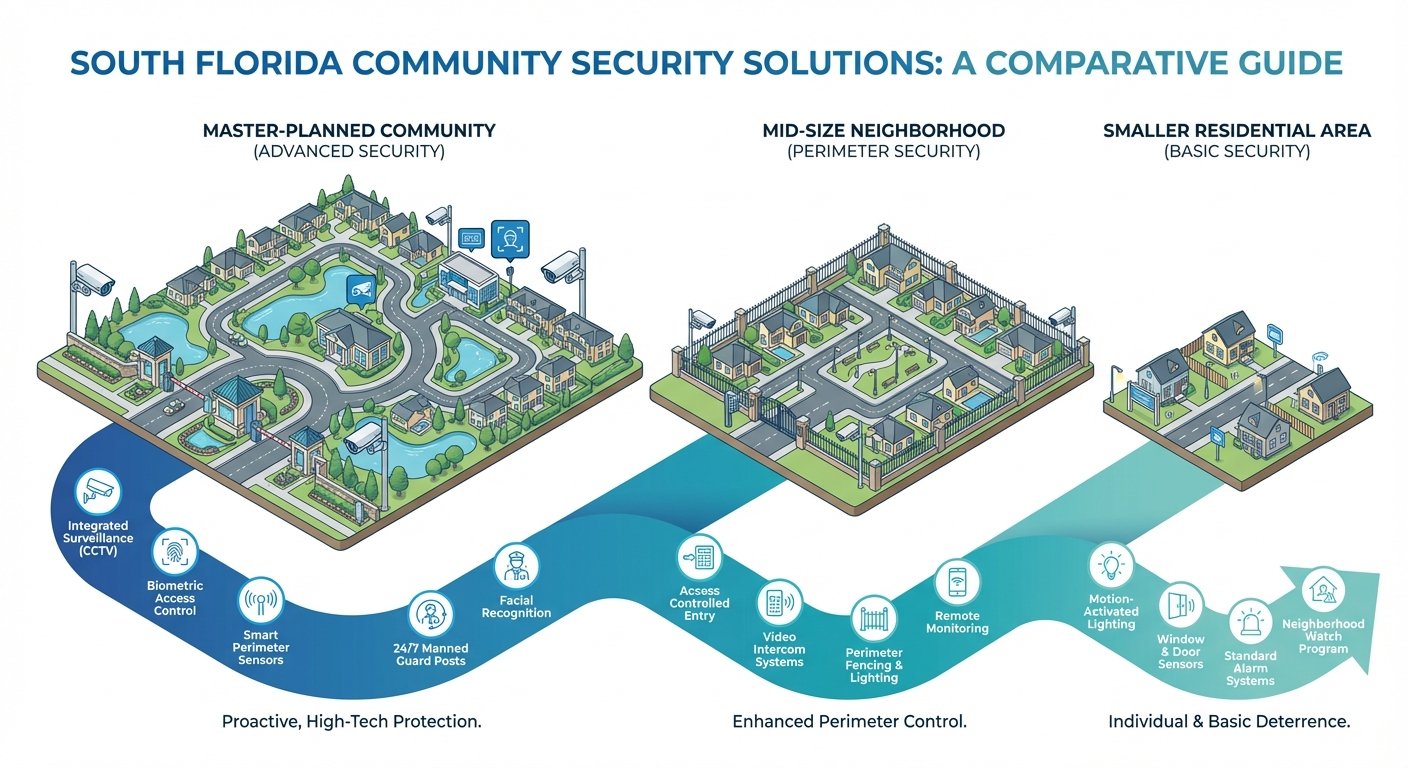
South Florida encompasses diverse residential communities, each requiring customized security approaches based on size, layout, and specific risk profiles.
Large Master-Planned Communities
Communities with 500+ homes require enterprise-grade security infrastructure capable of managing multiple access points, extensive video coverage, and thousands of resident credentials. These systems typically include multiple guard gates with dedicated security personnel, roving patrols, and comprehensive surveillance covering amenities like clubhouses, fitness centers, and pools.
Integration becomes paramount in large communities, with security systems connecting to property management software, accounting systems for dues collection, and community communication platforms. Centralized monitoring stations provide security operators with unified views of all system components, enabling coordinated responses to incidents.
Mid-Size Gated Communities
Communities with 100-500 homes often implement hybrid security models combining staffed gate access during peak hours with unmanned automated systems during off-hours. Video surveillance focuses on entrance points, main roadways, and high-value amenity areas.
These communities benefit from scalable systems that can expand as budgets allow, starting with core access control and video surveillance before adding advanced features like LPR and perimeter detection. Cloud-based management platforms reduce infrastructure costs while providing professional-grade security capabilities.
Townhome and Condominium Complexes
Higher-density residential communities face unique challenges including managing multiple building access points, parking structure security, and common area monitoring. Security systems emphasize building access control with video intercoms at entry doors, elevator access restrictions, and comprehensive parking surveillance.
These environments often integrate security systems with building automation, controlling lighting in common areas, managing elevator access floors, and coordinating with fire safety systems for emergency response protocols.
Critical Features of Professional HOA Security Systems
When evaluating community security systems, HOA boards should prioritize features that enhance both security effectiveness and operational efficiency.
Centralized Management Platforms
Professional security systems utilize unified management software that consolidates access control, video surveillance, and intrusion detection into single interfaces. These platforms enable security personnel to monitor all system components simultaneously, respond to incidents efficiently, and generate comprehensive reports for board meetings.
Cloud-based platforms offer particular advantages for HOA communities, eliminating on-site server requirements while providing remote access for board members and security managers. These systems automatically update software, backup data, and scale capacity based on community needs.
Mobile Integration and Resident Apps
Modern neighborhood surveillance systems extend security capabilities directly to residents through mobile applications. Residents can issue virtual passes to guests, delivery services, and contractors; receive notifications when visitors arrive; view live camera feeds from community common areas; and report suspicious activity directly to security personnel.
Mobile integration enhances security participation, transforming residents from passive beneficiaries into active security stakeholders who contribute to community protection.
Integration with Emergency Services
Professional hoa security systems can integrate with local law enforcement and emergency services through verified alarm protocols. When security incidents occur, systems automatically transmit detailed information including video footage, exact locations, and incident descriptions to responding agencies, accelerating emergency response times.
Some advanced systems participate in emergency alert networks, receiving notifications about nearby criminal activity or severe weather events that may impact community security.
Addressing Privacy and Legal Considerations
Implementing comprehensive security systems requires careful attention to privacy rights, legal compliance, and community governance.
Privacy Policy Development
HOA boards must establish clear policies governing security system operation, including camera placement restrictions, video access protocols, and data retention schedules. Florida law generally permits video surveillance in common areas and public spaces while prohibiting cameras that view into private residences or areas where privacy expectations exist.
Policies should address who can access security footage, under what circumstances video can be released to law enforcement or residents, and how long data is retained. Transparent privacy policies build resident trust while protecting the HOA from potential liability.
Vendor Access and Data Security
Professional security integrators implement cybersecurity measures protecting system access and stored data. This includes encrypted communications, multi-factor authentication for system access, regular security audits, and compliance with data protection standards.
Contracts with security vendors should clearly define data ownership, specify cybersecurity requirements, and establish liability for data breaches. HOA boards should verify that vendors maintain appropriate professional licensing and insurance coverage.
Budgeting and Financing HOA Security Systems
Security system investment represents significant capital expenditure requiring careful financial planning and resident communication.
Initial Installation Costs
Professional community security systems typically require investments ranging from $50,000 to $500,000+ depending on community size and system complexity. Costs include equipment, professional installation, infrastructure upgrades like network cabling and electrical work, and initial system programming.
Comprehensive projects often occur in phases, implementing core access control and video surveillance initially before adding advanced features. This phased approach distributes costs over multiple budget cycles while delivering immediate security improvements.
Ongoing Operational Expenses
Beyond initial installation, communities must budget for monthly monitoring services, software licensing fees, equipment maintenance, and periodic hardware upgrades. Professional monitoring services typically cost $200-$1,000 monthly depending on service levels and community size.
Maintenance contracts ensure systems remain operational with regular inspections, software updates, and priority repair services. These agreements typically cost 10-15% of initial system investment annually.
Return on Investment
While security systems require substantial investment, they deliver measurable returns through reduced insurance premiums, decreased property crimes, enhanced property values, and lower liability exposure. Studies indicate that comprehensive security systems can increase property values by 3-5% while reducing crime rates by 30-50% in protected communities.
Selecting Professional Security Integration Partners
The success of HOA security projects depends heavily on choosing experienced integration partners who understand community-specific requirements.
Licensing and Credentials
Florida law requires security system contractors to hold appropriate state licensing. Verify that potential vendors maintain current electrical contractor licenses (EC or ER classifications) and carry adequate liability insurance and workers’ compensation coverage.
Professional certifications from manufacturers and industry organizations indicate technical expertise and commitment to industry best practices. Look for certifications from organizations like ASIS International, Security Industry Association, and manufacturer-specific training programs.
Experience with HOA Projects
Community security projects involve unique challenges including working within occupied properties, coordinating with multiple stakeholders, and designing systems that balance security with aesthetic considerations. Contractors with extensive HOA experience understand these dynamics and can anticipate potential complications before they impact projects.
Request references from similar communities and visit completed installations to evaluate system performance and installation quality. Experienced contractors should provide detailed proposals outlining equipment specifications, installation methods, project timelines, and warranty terms.
Post-Installation Support
Long-term system success requires responsive technical support, regular maintenance, and system administration assistance. Evaluate potential vendors’ support capabilities including response times for service calls, technical support availability, and training programs for security personnel and HOA board members.
Local integration companies often provide superior support compared to national chains, with technicians familiar with specific installations and able to respond quickly to service needs.
Emerging Technologies in Community Security
Security technology continues evolving rapidly, with new capabilities enhancing protection while improving operational efficiency.
Artificial Intelligence and Video Analytics
AI-powered video analytics transform cameras from passive recording devices into intelligent monitoring systems. These systems detect unusual behaviors, identify specific objects or individuals, and filter false alarms by distinguishing between genuine security threats and harmless activity like animals or weather.
Advanced analytics enable proactive security by identifying potential incidents before they escalate, such as detecting individuals loitering near vehicles or approaching properties during unusual hours.
Integrated Smart Community Systems
Future community security systems will integrate seamlessly with broader smart community platforms, coordinating security with amenity reservations, parking management, package delivery systems, and utilities monitoring. These integrated platforms provide residents with unified applications managing all aspects of community interaction.
Drone Surveillance and Robotics
Some large communities are exploring autonomous drone patrols and robotic security guards that conduct scheduled perimeter inspections, respond to alarms, and provide mobile surveillance capabilities. While still emerging, these technologies show promise for supplementing traditional security personnel.
Implementing Your HOA Security System Project
Successful security system implementation requires systematic planning and execution involving multiple stakeholders.
Security Assessment and Planning
Begin with comprehensive security assessments evaluating current vulnerabilities, identifying high-risk areas, and documenting specific security objectives. Professional security consultants conduct these assessments, providing detailed reports with prioritized recommendations.
Security plans should address immediate concerns while establishing long-term roadmaps for system expansion and technology upgrades. Plans must balance security effectiveness with budget constraints and community preferences.
Resident Communication and Buy-In
Major security initiatives require resident approval and financial commitment. Effective communication campaigns explain security needs, present proposed solutions with cost-benefit analysis, and address resident concerns about privacy and operational impacts.
Town hall meetings, informational newsletters, and community website updates keep residents informed throughout project planning and implementation. Transparency builds trust and encourages resident participation in community security.
Project Management and Quality Control
Large security installations require professional project management ensuring work proceeds on schedule, meets quality standards, and stays within budget. Regular progress meetings with contractors, inspection of completed work, and systematic testing of all system components ensure successful project outcomes.
Comprehensive documentation including system diagrams, equipment manuals, warranty information, and operational procedures creates essential resources for ongoing system management.
Maximizing Security System Effectiveness
Even sophisticated security systems require proper operation and maintenance to deliver optimal protection.
Staff Training and Standard Operating Procedures
Security personnel need thorough training on system operation, emergency response protocols, and resident interaction procedures. Regular training updates ensure staff remain current on system capabilities and evolving security best practices.
Documented standard operating procedures provide consistent guidance for routine operations and emergency situations, ensuring professional security service regardless of which personnel are on duty.
Regular System Maintenance
Preventive maintenance programs extend equipment life while maintaining system reliability. Regular maintenance includes cleaning camera lenses, testing access control readers, updating software, checking network connections, and verifying backup systems.
Quarterly system reviews identify potential issues before they cause operational failures, while annual comprehensive inspections ensure all components meet manufacturer specifications.
Performance Monitoring and Continuous Improvement
HOA boards should regularly review security metrics including incident reports, system uptime statistics, false alarm rates, and response times. This data identifies opportunities for system optimization and validates security investment effectiveness.
Annual security reviews assess whether existing systems continue meeting community needs or require upgrades to address emerging threats and incorporate new technologies.
Professional Security Integration for South Florida Communities
Implementing comprehensive hoa security systems requires specialized expertise in technology integration, Florida building codes, and community-specific security challenges. Professional security integrators design customized solutions addressing each community’s unique needs while ensuring systems remain scalable for future expansion.
TechPro Security Products specializes in professional security system design and installation for South Florida HOA communities. Our experienced team works closely with HOA boards, property managers, and residents to create integrated security solutions that protect property, enhance resident safety, and provide long-term value. We understand the unique challenges facing South Florida communities and design systems that perform reliably in coastal environments while meeting stringent code requirements.
Contact TechPro Security Products today to schedule a comprehensive security assessment for your community. Our security professionals will evaluate your specific needs, explain available technologies, and provide detailed proposals outlining how modern security systems can protect your investment and provide peace of mind for residents. Let us help you create a safer, more secure community through professional security integration services backed by expert installation and responsive ongoing support.